 01
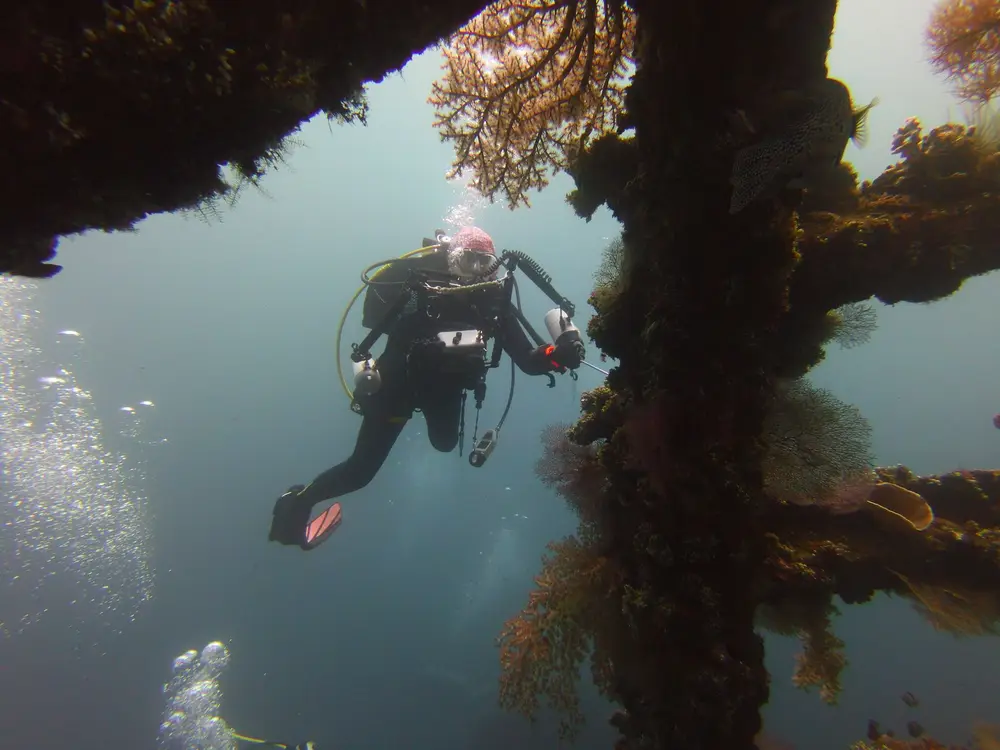
01 Richelieu Rock
Richelieu Rock is a renowned pinnacle dive site in Thailand's Andaman Sea, known for strong currents and abundant marine life.
advanced
Explore this site → 

Family guide
Thailand's 73 dive sites offer 26–30°C water year-round, whale sharks, and everything from beginner bays to 50m walls.
Thailand has 73 published dive sites spread across the Gulf of Thailand and Andaman Sea, with water sitting between 26°C and 30°C every month of the year. That combination — reliable warmth, no real off-season, and a range of sites from sheltered beginner reefs to advanced open-water pinnacles — makes it one of the most practical dive destinations in Southeast Asia. Whether you're doing your first open-water dives or chasing pelagics at depth, there's a site that fits.
The reefs, walls and wrecks worth the trip — each with real conditions, seasons and marine life.
01 Richelieu Rock is a renowned pinnacle dive site in Thailand's Andaman Sea, known for strong currents and abundant marine life.
 02
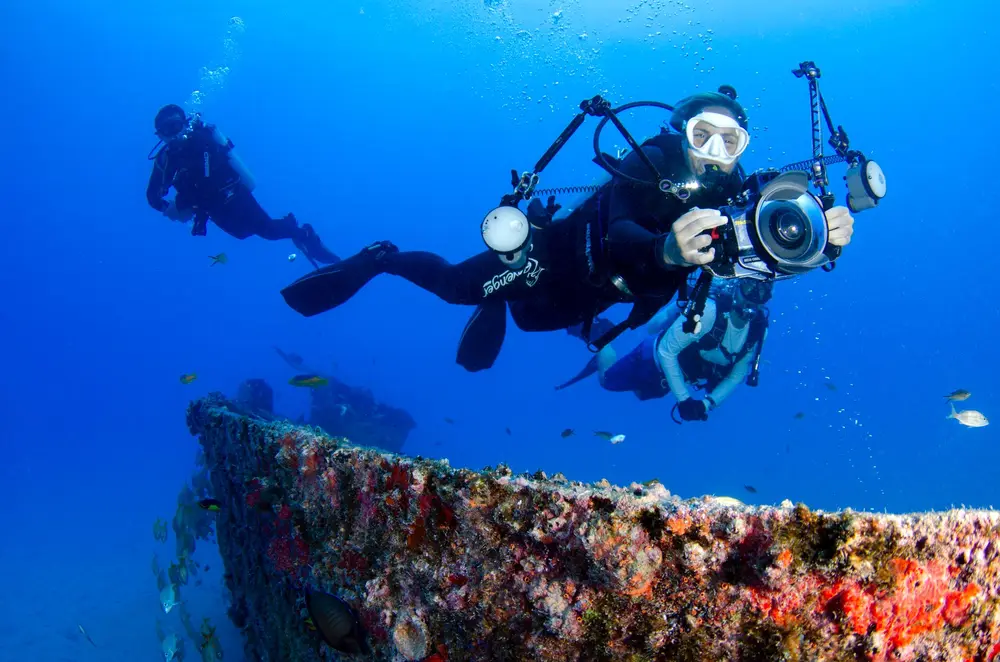
02 Big Blue offers year-round diving in Thailand's Khlong Bang La On waterway, with healthy coral and consistent marine life sightings.
 03
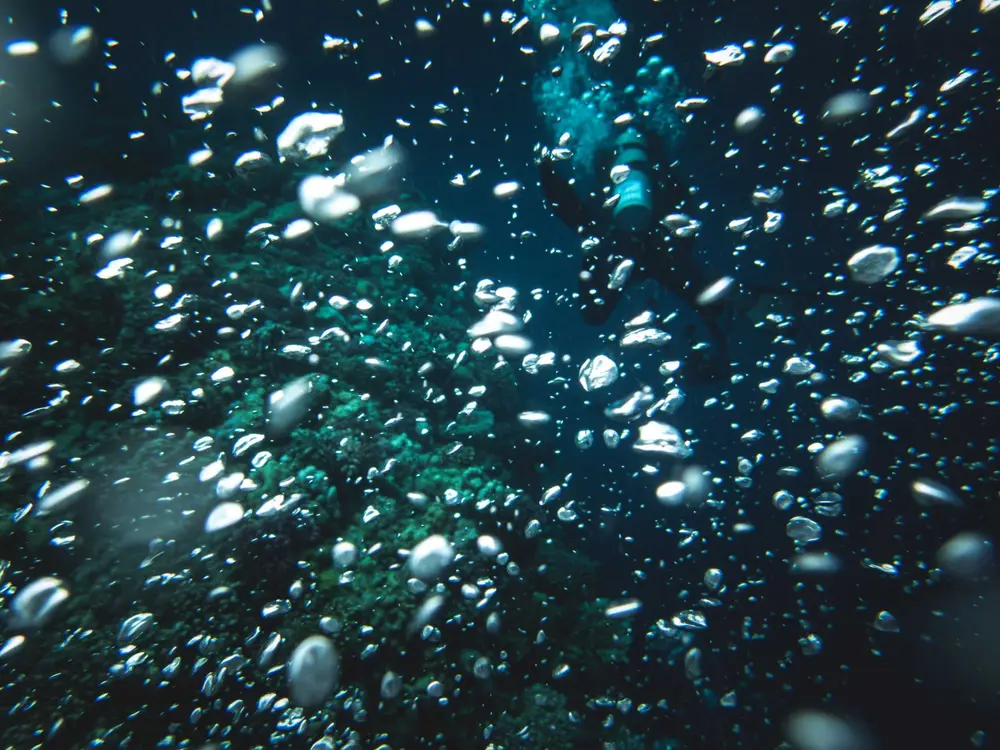
03 Blueberry Hill is a year-round Thailand dive site with 11 documented species and 3 community videos. Currently under coral bleaching warning.
 04
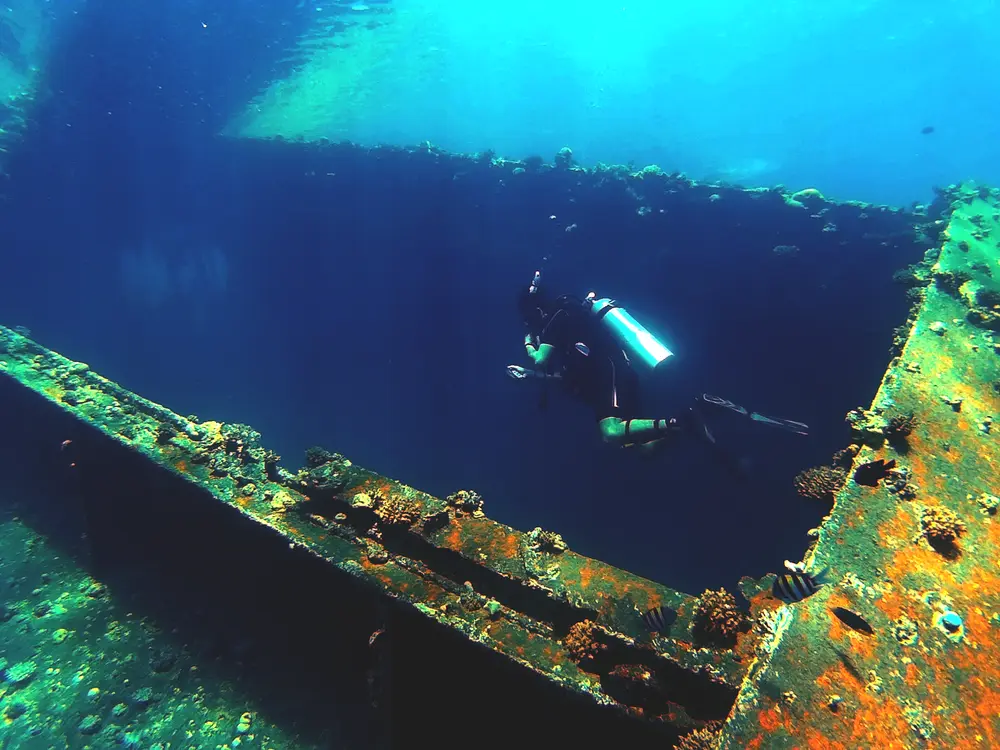
04 Boonsung Wreck is a year-round Thailand dive site with 12 documented species observations and active community video content.
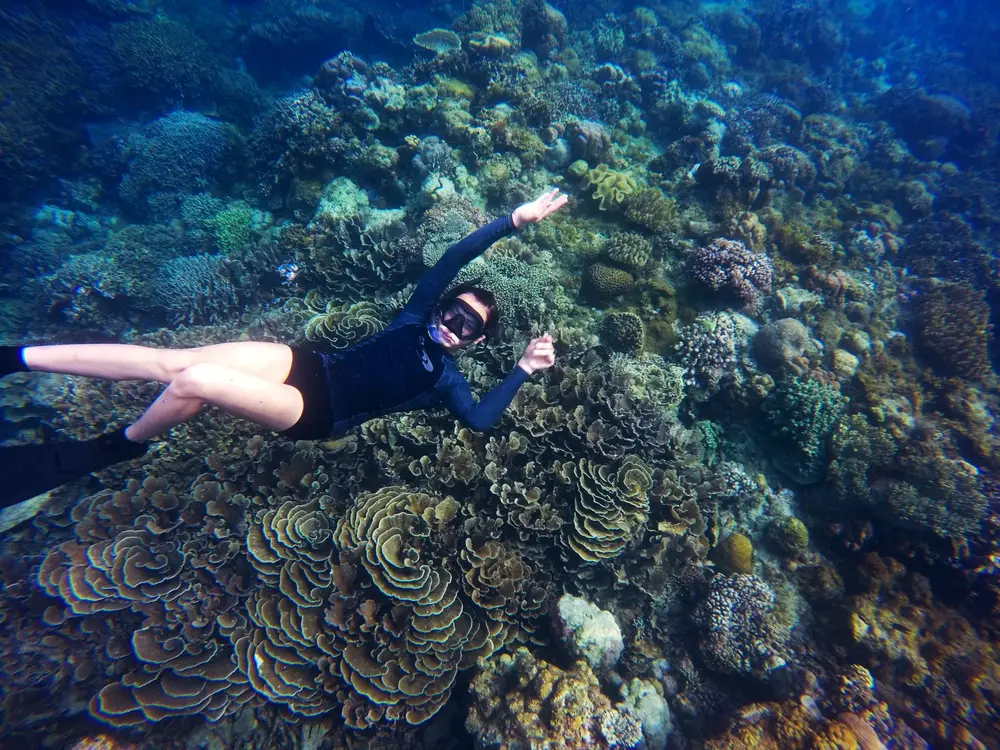 05
05 Ko Wai offers year-round diving with accessible reefs and diverse marine life. Monitor coral health before booking.
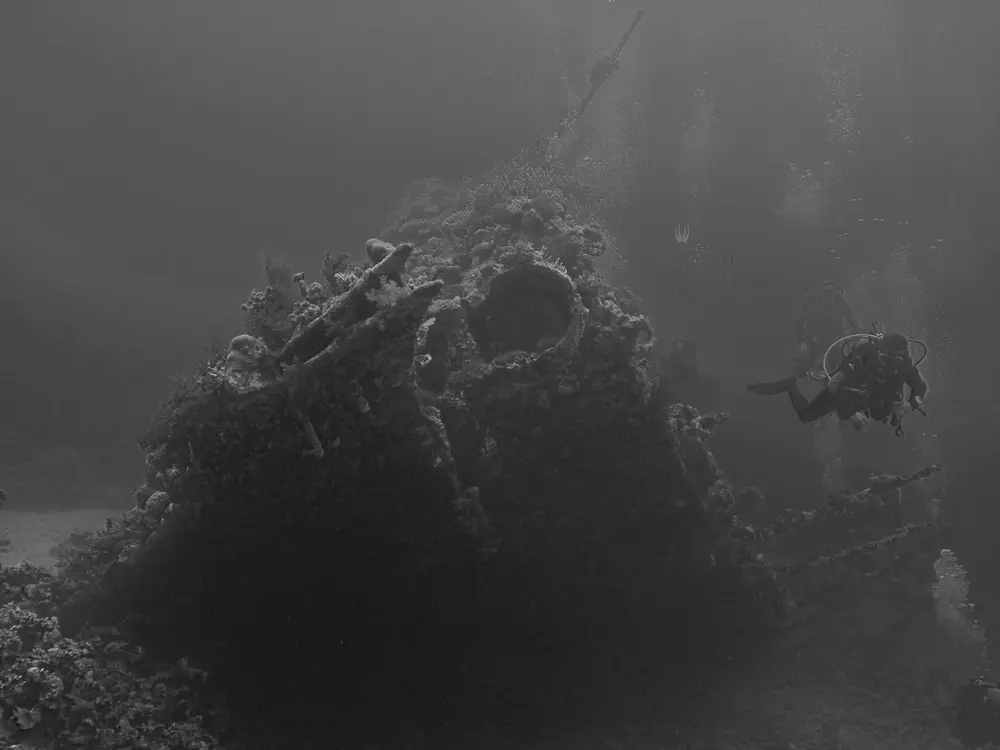 06
06 HTMS Chang is a Thai naval wreck offering year-round diving with documented marine life and accessible conditions for most divers.
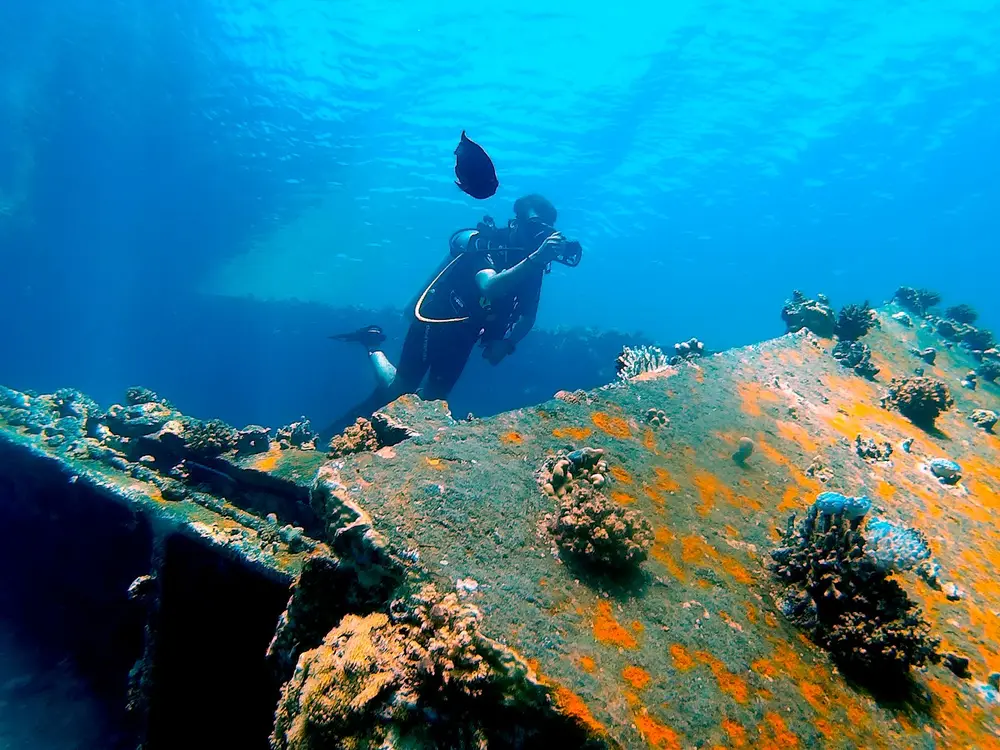 07
07 HTMS Khram is a decommissioned US landing ship wreck in Thailand, offering year-round diving on a historic military vessel with diverse marine life.
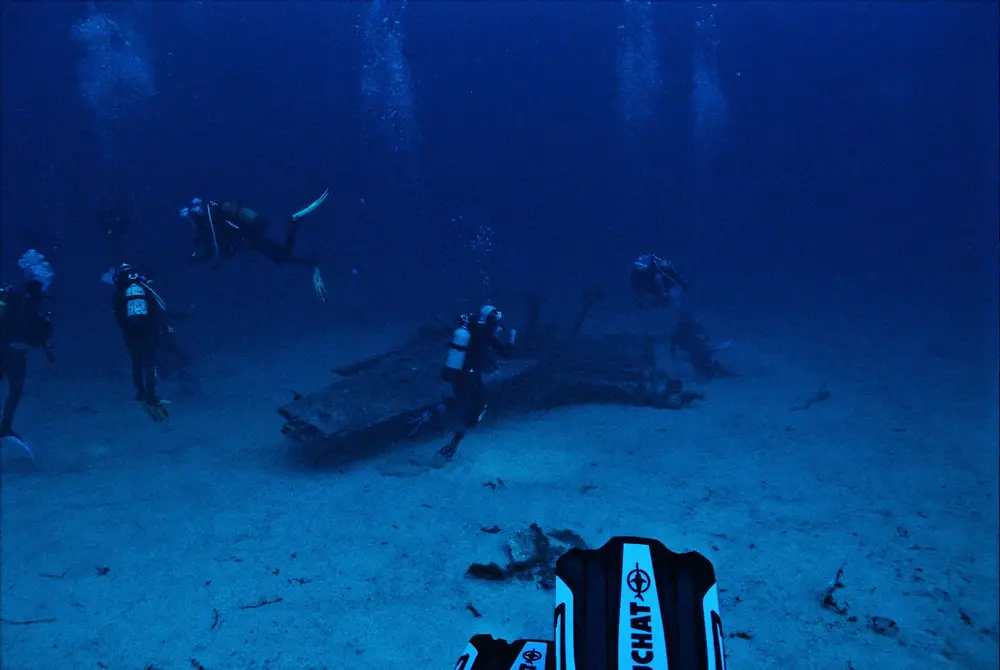 08
08 HTMS Kut is a wreck dive in Thailand accessible year-round, with 12 recorded species observations and growing community video content.
Thailand is diveable year-round, with water temperature holding between 26°C and 30°C across all seasons. The Andaman and Gulf coasts have opposite weather patterns — when the southwest monsoon affects Phuket (roughly May–October), the Gulf sites around Koh Tao and Koh Samui are typically calm, and vice versa. This means you can nearly always find a coast that's diving well, regardless of the month.
Yes. Sites like The Elephants, Big Blue, Suthep Bay, and หินใบ are specifically rated beginner-level, with shallow depths and calm conditions. Most dive centres around Koh Tao and Phuket run PADI open-water courses, and the warm water means no wetsuit anxiety for first-timers.
Thailand's recorded marine life includes whale sharks — most reliably spotted at Hin Daeng, Hin Muang, and occasionally Sail Rock — and blacktip reef sharks, which are common at Sail Rock and Chumpon Pinnacle. Anemone Reef delivers dense invertebrate life and clownfish. Across sites you'll also encounter schooling fusiliers, moray eels, and the soft coral walls that define the deeper Andaman pinnacles.
Do I need advanced certification for Hin Daeng? Yes. The site reaches 50 m and involves open-water conditions. Advanced Open Water certification is the minimum most operators require.
Can I dive Koh Tao and Phuket on one trip? Practically, yes, but they're on opposite coasts — budget a flight or an overnight train between them.
Is visibility consistent across sites? No. Sail Rock can range from 5 m to 40 m depending on plankton and current. Hin Muang typically holds around 15 m. Check recent dive logs before booking liveaboards.
Are whale shark sightings guaranteed? Nothing is guaranteed, but Hin Daeng and Hin Muang have the strongest track record for whale shark encounters in Thailand.
≈ 42 m · The seabed
Thousands more dive sites are waiting in the blue — pick your next descent.