Skip to content
OpenWaterAtlas

Banco Chinchorro

Banco Chinchorro is Mexico's largest coral atoll and a remote advanced dive destination with wrecks, walls, and pristine reef structure.

⭐ Best for advanced divers.

updated 4 months ago
Difficulty
Advanced
Depth
5–40 m
BoatOnlyAdvancedOnlyWreckDrift dive
+2 more
CurrentVariesWideAngleSpot

At a glance

Activity
dive
Difficulty
advanced
Depth
5–40 m

Map

This spot Airport Nearby spots
© OpenStreetMap · CARTO
Open in Google Maps

Conditions today

Conditions

Open-Meteo
Wind
8.5 kn
Wave
0.48 m
Water
30°C
N E S W
Wind direction (7d)
Primary: ESE (40%)
Now: E (84°)
Tide (7 days)
range: 0.25m

Today: High 04:00 (+0.29m), Low 11:00 (+0.12m)

+0.4 m+0.1 m
▲ 04:00 · +0.29m ▼ 11:00 · +0.12m ▲ 17:00 · +0.28m ▼ 23:00 · +0.16m Now +0.2m
Fri 18Sat 19Sun 20Mon 21Tue 22Wed 23Thu 24
UV8.65 · very high Air PM2.53 · good 06:37 18:48
Day Wind Wave UV Rain
09-18 9.1 0.52 9 0mm
09-19 14.4 0.48 9 8mm
09-20 12.1 0.52 8 4mm
09-21 14.6 0.52 9 12mm
09-22 12 0.64 8 10mm
09-23 12.2 0.62 8 11mm
09-24 12 0.7 8 18mm

About this spot

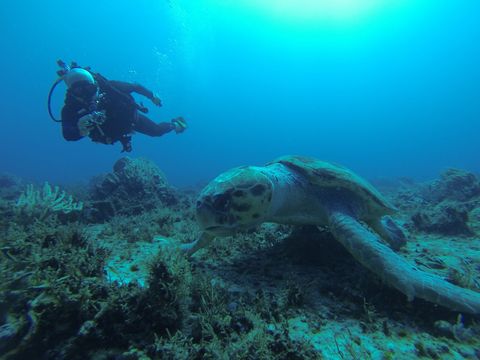
Banco Chinchorro sits off Mexico's Caribbean coast as the country's largest coral atoll system. The site spans a massive underwater plateau with depths ranging from 5 to 40 meters, making it suitable for intermediate to advanced divers seeking technical challenges and pristine conditions. The atoll is famous for its dramatic wall dives, coral formations, and a collection of shipwrecks scattered across the seafloor. These wrecks tell the story of maritime traffic through the Caribbean and provide excellent exploration opportunities for experienced divers. The shallow reef sections contrast sharply with steep drop-offs, creating diverse dive profiles within a single trip. Access to Banco Chinchorro requires advance planning and typically involves charter boat operations from the mainland. The remote location means fewer dive operators and smaller daily visitor numbers, preserving the reef ecosystem and offering a wilderness dive experience. Divers should be comfortable with boat entries, strong currents, and navigation in open water. The atoll operates outside marine protection zones, allowing flexible dive operations year-round. Its isolation from major coastal development keeps the reef structure relatively intact, with healthy coral colonies and active fish populations supporting the diving experience.

📖 Guide: Diving in Mexico: 51 Sites from Cenotes to Shark Dives

Dive types

WallWreckReefBoat

Trip essentials

Everything you need before you pack — checklist, sun, logistics.

Trip checklist

  • 🛂 Visa-free or visa-on-arrival
  • 📜 C-card + dive insurance (DAN)
  • 📔 Dive logbook
  • 🧴 Reef-safe sunscreen SPF 50+
  • 🔌 Plug type A/B · 127V adapter
  • 💊 Seasickness meds + ear drops
  • 📱 Offline maps + emergency contact

Quick facts

  • 🌓 Moon First quarter · 48%
  • GPS
Sustainability disclosures
🌍 CO2 footprint LHR ↔ 8187km · ~1883kg · €34

From your departure country

United States
Origin score: 96/100
  • Visa: Visa-free · 90 days max
  • Flight: 11h · direct
  • Jet-lag: 1h east · 1 day recovery

FAQ

When is the best time to dive Banco Chinchorro?

Banco Chinchorro is diveable year-round. Calmer seas and better weather typically occur in drier months, though exact seasonal patterns depend on Caribbean conditions. Check with charter operators for current conditions before booking.

What experience level do I need for Banco Chinchorro?

Banco Chinchorro is rated advanced. Depths to 40 meters, strong currents, wreck navigation, and open-water boat diving require solid buoyancy control, navigation skills, and experience with multi-level dive profiles.

What marine life will I see?

Banco Chinchorro hosts Caribbean reef fish, groupers, snappers, and pelagics. Sharks, rays, and large schools are common in deeper sections. Coral colonies provide habitat structure. Specific species checklists vary by dive site and season.

Do I need permits or special access?

Banco Chinchorro is accessed via licensed charter operations. Divers must book with established operators familiar with the atoll. Bring valid passport and dive certification. Check current Mexican maritime and fisheries requirements before travel.

Verified marine species observations

57 records · 28 species · sources: OBIS, GBIF

Palythoa caribaeorum

Anthozoa · Sphenopidae
GBIF
Last seen:
27 Apr 2026
×4records

Petrochirus diogenes

Malacostraca · Diogenidae
GBIF
Last seen:
27 Apr 2026
×2records

Montastraea cavernosa

Anthozoa · Montastraeidae
GBIF
Last seen:
27 Apr 2026
×2records

Aplysia dactylomela

Gastropoda · Aplysiidae
GBIF
Last seen:
27 Apr 2026
×2records

Gorgonia Linnaeus, 1758

Anthozoa · Gorgoniidae
GBIF
Last seen:
27 Apr 2026
×1records

Favia fragum

Anthozoa · Faviidae
GBIF
Last seen:
27 Apr 2026
×1records

Faviidae

Anthozoa · Faviidae
GBIF
Last seen:
27 Apr 2026
×1records

Stenorhynchus seticornis

Malacostraca · Inachoididae
GBIF
Last seen:
27 Apr 2026
×1records

Pennaria disticha

Hydrozoa · Pennariidae
GBIF
Last seen:
27 Apr 2026
×1records

Condylactis gigantea

Anthozoa · Actiniidae
GBIF
Last seen:
27 Apr 2026
×1records

Acanthopleura granulata

Polyplacophora · Chitonidae
GBIF
Last seen:
26 Apr 2026
×6records

Stichodactyla helianthus

Anthozoa · Stichodactylidae
GBIF
Last seen:
26 Apr 2026
×4records

Data: 187,991 observations from OBIS (Ocean Biodiversity Information System) and GBIF (Global Biodiversity Information Facility). CC-BY 4.0.

If conditions don't work

Activities nearby or alternative spots — keep your trip going.

Nearby spots

Buceando Mahahual Mexico Diving
🇲🇽 Mexico

Buceando Mahahual

Year-round Caribbean diving off Mexico's Costa Maya. Mahahual offers consistent reef access with healthy coral and diverse marine life.

Beginner 15m Jan·Feb·Mar+
Ambergris Caye — Mexico Rocks Belize Diving
🇧🇿 Belize

Ambergris Caye — Mexico Rocks

Mexico Rocks near Ambergris Caye is a shallow, beginner-friendly reef system perfect for new divers and snorkelers year-round.

Beginner 4–8m
Shark Ray Alley (Hol Chan) Belize Diving
🇧🇿 Belize

Shark Ray Alley (Hol Chan)

Shallow beginner dive in Belize's Hol Chan Marine Reserve where nurse sharks and southern stingrays gather in 4–8 metres.

Beginner 4–8m 15m

Similar spots

Same activity, shared marine species or similar profile.

Dry Tortugas National Park United States Diving
🇺🇸 United States

Dry Tortugas National Park

Dive pristine coral reefs and historic wrecks in a remote national park 70 miles west of Key West, Florida.

Intermediate 30m May·Jun·Jul+
St. John's — Habili Ali Egypt Diving
🇪🇬 Egypt

St. John's — Habili Ali

Habili Ali is an advanced deep reef dive in Egypt's Red Sea, dropping to 40m with strong currents and rich marine life.

Advanced 12–40m Jan·Feb·Mar+
Tubbataha — Jessie Beazley Reef Philippines Diving
🇵🇭 Philippines

Tubbataha — Jessie Beazley Reef

Jessie Beazley Reef at Tubbataha offers advanced divers pristine coral walls and pelagic encounters in a protected marine park.

Advanced 8–40m
Walindi — Bradford Shoals Papua New Guinea Diving
🇵🇬 Papua New Guinea

Walindi — Bradford Shoals

Walindi's Bradford Shoals offers advanced divers dramatic deep coral formations and prolific pelagic action in Papua New Guinea's Kimbe Bay.

Advanced 18–40m

Suggest an operator

Know a great dive shop, kite school, or local guide at this spot? Tell us — we'll review and add it.

Up to 500 characters
Plan
View →