About this spot
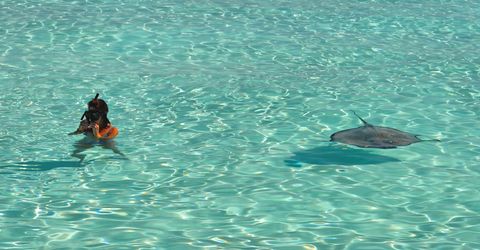
Eden Rock sits in 8–18 metres of water on Grand Cayman's north coast, making it one of the island's most accessible dive sites. The wall drops gradually, so newer divers can explore at their own pace without feeling rushed or exposed to depth. Entry is straightforward from the shore, and the site works for both guided groups and independent divers. The reef here supports typical Caribbean wall habitat—small corals, sponges, and reef fish move through the shallows and along the wall face. You'll see schooling jacks, parrotfish, and wrasses. The depth range keeps you within no-decompression limits even on longer bottom times, and shallow enough that surface intervals are brief. Because Eden Rock lies outside marine-protected areas, access is unrestricted. Conditions tend to be stable year-round on this lee shore. The site handles small groups well and doesn't demand special navigation or hazard awareness beyond standard wall diving. It's ideal for open-water certification dives or refresher training.
Dive types
Trip essentials
Everything you need before you pack — checklist, sun, logistics.
Trip checklist
- 🛂 Visa-free or visa-on-arrival
- 📜 C-card + dive insurance (DAN)
- 📔 Dive logbook
- 🧴 Reef-safe sunscreen SPF 50+
- 🔌 Plug type A/B · 120V adapter
- 💊 Seasickness meds + ear drops
- 📱 Offline maps + emergency contact
Quick facts
- 🌓 Moon First quarter · 47%
- GPS
› Sustainability disclosures
From your departure country
- Visa: Visa-free · 90 days max
- Flight: 11h · direct
- Jet-lag: 0h
FAQ
›When is the best time to dive Eden Rock?
Year-round diving is possible at Eden Rock. Grand Cayman's north shore stays relatively sheltered and calm most months. Winter can bring occasional swells, so summer through autumn typically offers the most consistent conditions.
›What depth range and difficulty level suits Eden Rock?
The site spans 8–18 metres, making it ideal for beginners and open-water students. The gradual wall descent means newer divers can build confidence without sudden depth changes. No advanced navigation or deep-water skills are required.
›What marine life will I see?
Expect schooling reef fish such as jacks, snappers, and wrasses. Parrotfish graze the coral, and you'll spot sponges and small coral heads along the wall. Larger pelagics are less common, but the site offers steady Caribbean reef biodiversity.
›How do I access Eden Rock and are permits needed?
Shore entry is straightforward and no special permits are required, as the site sits outside protected areas. Entry conditions and parking are typically easy to arrange, and many local operators offer guided dives here.