
About this spot
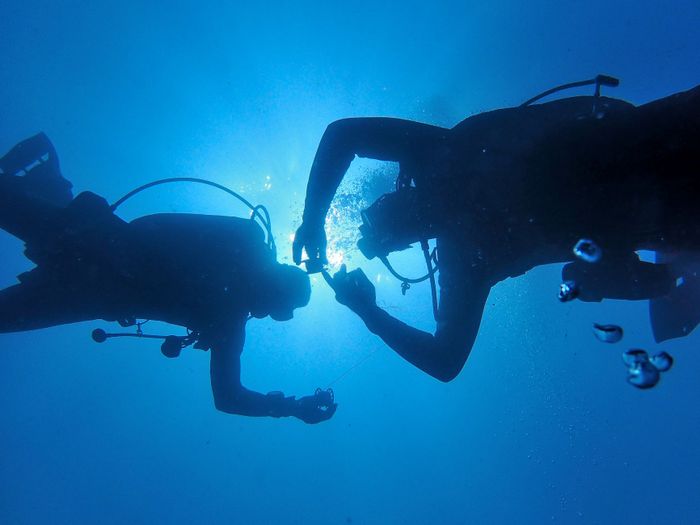
The Great Blue Hole is a submarine sinkhole off Belize's coast, protected within the Blue Hole Natural Monument. This advanced dive takes you down 30–40 meters into a dramatic geological formation. The hole itself is a wide, circular depression on the seafloor, ringed by shallow coral reef. Most dive operators run guided trips from nearby atolls or coastal towns; typical operations include a reef stop and the Blue Hole descent in one day. You'll encounter strong currents and variable light at depth. The walls show limestone stalactites—remnants from when this was a cave system above water during lower sea levels. Marine life around the rim includes reef sharks, grouper, and smaller reef species. The formation itself is barren rock and sand below, with life concentrated on the outer slopes. Access is controlled because the site sits inside a protected marine area. Most divers book through established operators who manage permits and logistics. Expect the dive to be physically demanding: deep, dark, and current-swept. It's worth doing, but go with experienced guides who know the conditions. Visibility and water temperature vary seasonally, so ask your operator for current conditions before booking.
Dive types
Trip essentials
Everything you need before you pack — checklist, sun, logistics.
Trip checklist
- 🛂 Visa-free or visa-on-arrival
- 📜 C-card + dive insurance (DAN)
- 📔 Dive logbook
- 🧴 Reef-safe sunscreen SPF 50+
- 🔌 Plug type A/B/G · 110V adapter
- 💊 Seasickness meds + ear drops
- 📱 Offline maps + emergency contact
Quick facts
- 🌓 Moon First quarter · 47%
- GPS
› Sustainability disclosures
From your departure country
- Visa: Visa-free · 90 days max
- Flight: 12h · direct
- Jet-lag: 1h east · 1 day recovery
FAQ
›When is the best time to dive the Great Blue Hole?
The site is accessible year-round. Conditions vary with season—ask your operator about visibility and current strength for your planned dates.
›What depth and difficulty level is required?
This is an advanced dive. You'll descend 30–40 meters. Strong currents and limited light make it unsuitable for beginners or those without deep-dive training.
›What marine life will I see?
Reef sharks, grouper, and smaller reef fish are common around the outer rim. The blue hole's interior is mostly barren rock. Most life clusters on the slope edges.
›Do I need permits or special access?
The site is protected within the Blue Hole Natural Monument. Access is controlled. All dives must be booked through authorized operators who handle permits and compliance.


