
It's 14:40 on a Thursday in late July at Paje, and the wind anemometer at the launch is reading 24 knots from 155° — textbook Kusi. The water in front of the kite school is shin-deep for 300 metres out, glassy where the sand bar drops, and unrideable. High water was at 09:18. Low water is at 15:33. Nobody is on the water. By 17:00, when the tide has pushed back in over the flats, twenty kites will be up and the same wind will feel like a different sport entirely.
This is the part of Zanzibar kitesurfing that the "go in July" guides skip. The wind is doing what the climatology promises. The tide is not.
Paje sits behind a fringing reef on the southeast coast of Unguja island. The reef makes the lagoon flat. The lagoon is also a tidal flat, and the Zanzibar coast has one of the larger semidiurnal tidal ranges in the western Indian Ocean — spring ranges push past 3.8 metres.[3] The result is a venue whose rideability is governed by a three-variable equation: which monsoon is blowing, where the moon is in its spring–neap cycle, and which two-hour window of the day you happen to walk down to the beach. Most kite-travel content treats only the first variable. This piece is about all three.
We've pulled five years of hourly ERA5 reanalysis wind data for the Paje grid cell (6.27°S, 39.53°E) from Open-Meteo,[1] Copernicus OSTIA SST climatology for the same square,[2] tidal data from the IOC Zanzibar gauge,[3] and routing data from OpenFlights[5] to build the picture below. None of it replaces local knowledge. All of it makes the trade-offs visible.
🌬️ Two monsoons, one lagoon: what Kusi and Kaskazi actually deliver
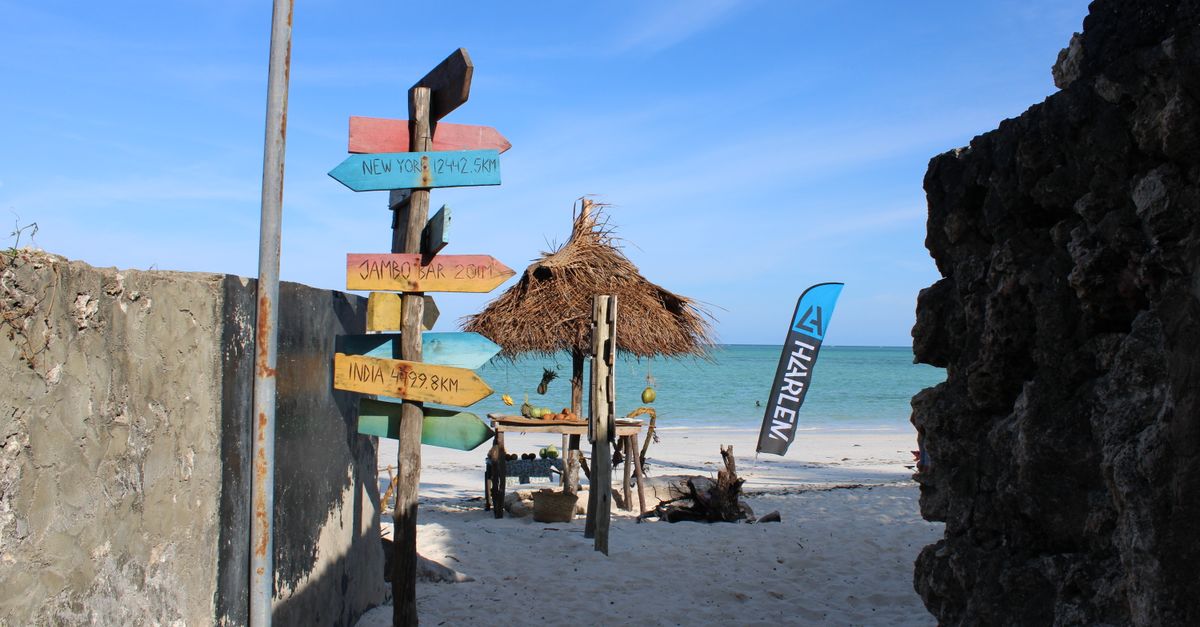
- Kusi (May–Oct): modal wind SSE, 22–26 kn at peak (Jul–Aug)
- Kusi reliability: ~68–74% of daylight hours ≥15 kn (Jul–Aug, Open-Meteo 2019–2024)[1]
- Kaskazi (Dec–Feb): modal wind NNE, 12–16 kn at peak (Jan)
- Kaskazi reliability: ~38–45% of daylight hours ≥15 kn[1]
- SST swing: 25.5°C (Aug) to 29.8°C (Feb)[2]
The Kusi is the southeast trade-monsoon: cold, dry, dependable. By mid-June it has usually set in, and from late June through early September it dominates the daylight forecast. Five years of hourly Open-Meteo reanalysis put the July reliability of ≥15-knot wind during daylight at roughly 72%[1] — high, but not the "blows every day" figure marketing copy implies. One day in four still falls short of planing wind for a 75 kg rider on a 9 m kite.
The Kaskazi is the northeast monsoon, and it is the underrated window. It is lighter (12–16 kn modal), warmer (SST near 30°C),[2] more thermal in its diurnal cycle, and significantly less crowded. For a foiler on a 15 m or a returning rider relearning their water-start in boardshorts, January at Paje is an honest answer to the question July tries to be.
Caveat: ERA5 at 10 m height systematically under-resolves sea-breeze reinforcement and the acceleration of wind around the Paje headland. Local logbook averages from kite schools tend to run 2–4 knots higher than reanalysis for the afternoon peak. Treat the reliability percentages as directional.
🌊 The tide is the real variable
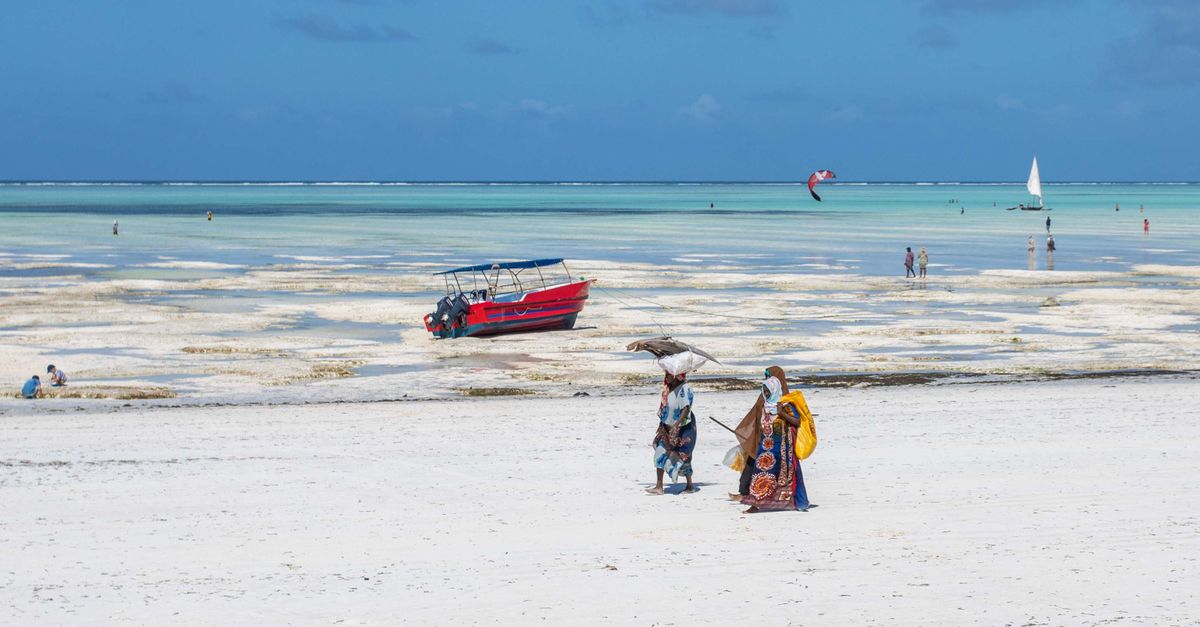
- Spring tidal range: 3.8–4.2 m (IOC Zanzibar Town gauge)[3]
- Neap range: 1.6–2.0 m[3]
- Usable lagoon depth for water-relaunch: ~0.8 m minimum
- Spring-tide rideable window: roughly HW −2 hr to HW +2 hr
- Neap-tide rideable window: ~6–7 hours per cycle
On a spring tide at low water, the rideable lagoon retreats 400–600 metres from the beach and what remains is ankle to shin depth over hard sand. You cannot water-relaunch a kite in 20 cm of water. You can damage a foil mast permanently in 40 cm. The Kusi wind doesn't care — it's still 24 knots — but the water is gone.
Neap tides are the unsung blessing of Paje. With a range of under 2 m, the lagoon retains workable depth for most of the daylight cycle, and a session plan stops being a logistics puzzle. If you are flying in for one week, look at the moon phase before you look at the wind forecast: book around the first or third quarter, not the new or full moon.
Caveat: there is no public bathymetric survey of the Paje lagoon at a usable resolution. The depth figures above are inferred from tidal range plus operator reports plus UKHO chart 3996 in the broader channel.[8] OBIS records confirm honeycomb stingray (Himantura uarnak) presence in the lagoon system.[4][9] The low-tide shuffle is a real precaution; no kite school's intake form mentions it.
📅 Month by month, the honest version
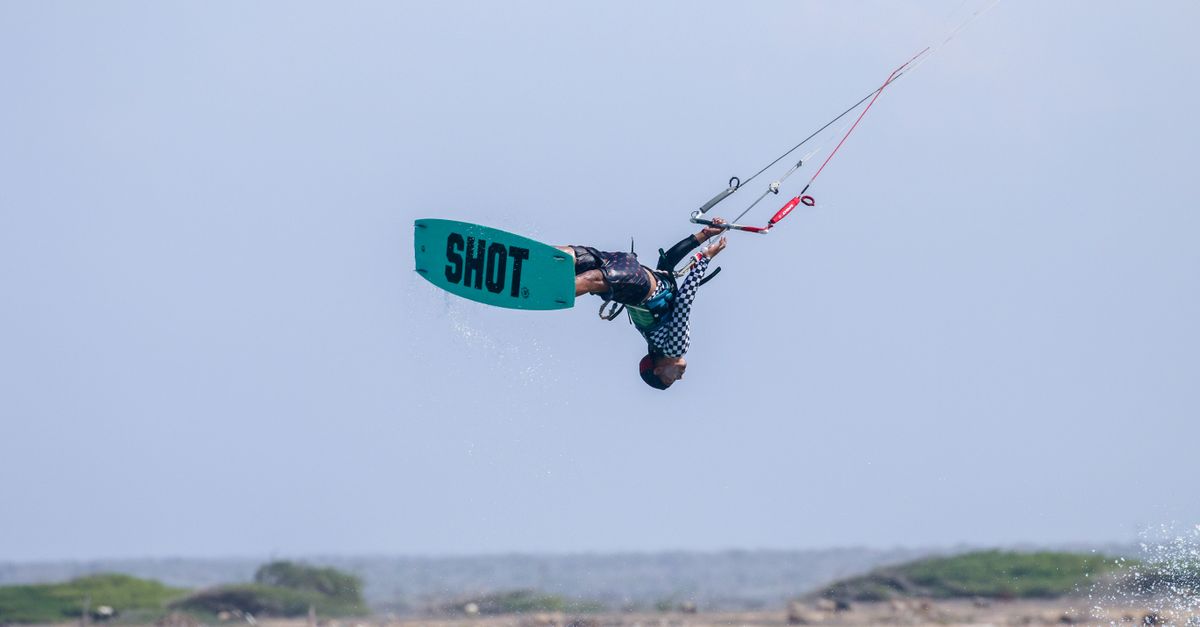
- Most reliable month: July (~72% daylight hours ≥15 kn)[1]
- Second-most reliable: August (~70%), then June (~62%)[1]
- Worst month: April (~18%, ITCZ overhead, long rains)[1]
- Underrated month: October (~58% reliable, SST 27.2°C)[1][2]
- Kaskazi peak: January (~42%, NNE, 12–16 kn modal)[1]
April is the month to actively avoid. The Kusi has not set in; the Kaskazi has faded; the long rains are sitting over the coast. A week's holiday in April has a real probability of producing zero rideable sessions, and we say this with the data to back it up.
October is the most interesting answer for a rider who can plan around the calendar. The Kusi is winding down but still produces nearly six days in ten with planing wind, the SST has climbed back to 27°C from its August floor, and the European school holidays are over. The same applies to late May, on the leading edge — less reliable than October but with the same uncrowded character.
Caveat: five years of reanalysis is not climatology. The 2019–2024 window includes one moderate El Niño event (2023), which suppressed the Kusi noticeably along the East African coast — a pattern documented in the longer-run literature on Indian Ocean SST and short-rains variability.[7] Check NOAA's CPC ENSO advisory[6] before booking a fixed-date Kusi trip.
🏄 Who Paje actually suits — and who it doesn't
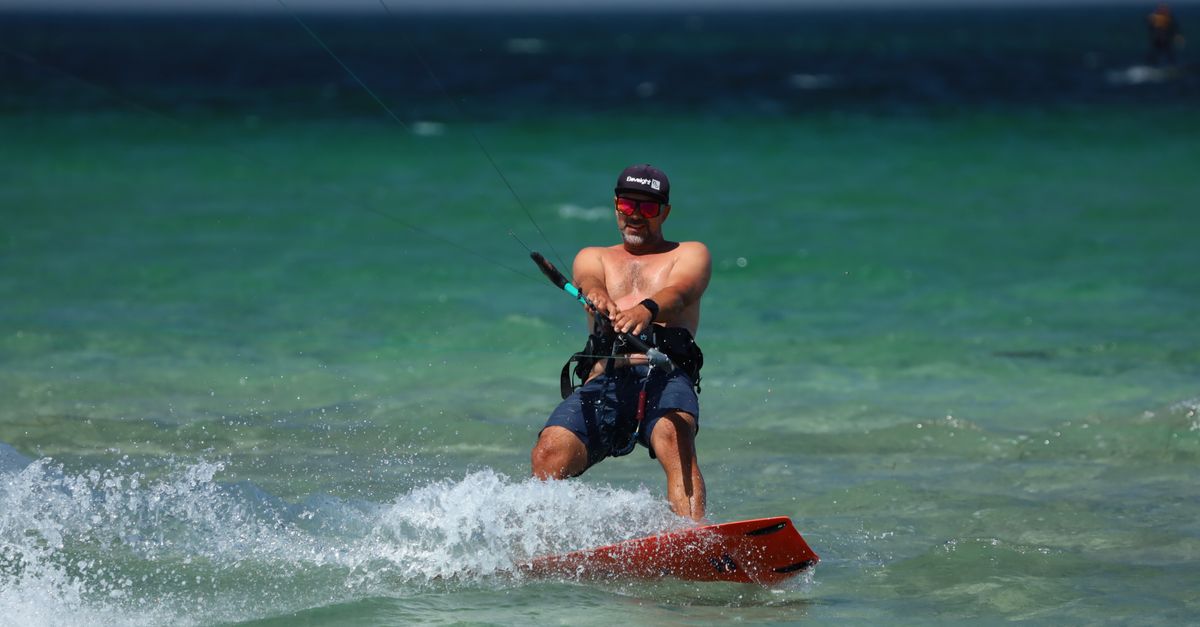
- Improver window: Jan–Feb, neaps, 12–14 kn Kaskazi, SST 29°C, no wetsuit
- Freestyle window: Jun–Aug, Kusi 20–26 kn, mid-tide ±2 hr, chop 0.3–0.6 m
- Foil window: Oct + Jan–Feb, neap high water, lighter wind, no grounding risk
- Not suitable for: absolute first-timers in Kusi; wave riders; "every day must blow" trips
For a rider who can already body-drag and water-start, the Kaskazi at neap tides is one of the more forgiving learning environments in the Indian Ocean. Warm water, flat lagoon, side-onshore wind, and operators including Kite N Surf Zanzibar running IKO-aligned progression in the lighter window. For freestylers, the Kusi at mid-tide produces enough texture for pop without being chop-ridden, and the wind range supports 9–10 m kites for a 75 kg rider through most of the afternoon.
Foilers are the most tide-sensitive group. A foil mast needs at least 1.2 m of water under the board to avoid contact with the bottom on a touchdown. That means foiling at Paje is a neap-high-water sport, or a Kaskazi sport, or both. Pilipili Uhuru Kite Zanzibar sits slightly differently on the beach and has marginally different tidal exposure — worth asking the operator about on the day.
Caveat: "improver" here means body-drag and water-start competent. First-timer instruction in 25-knot Kusi is genuinely hazardous regardless of how it's marketed. We have no independent injury data from Paje to put a number on this.
✈️ Getting there: routing reality
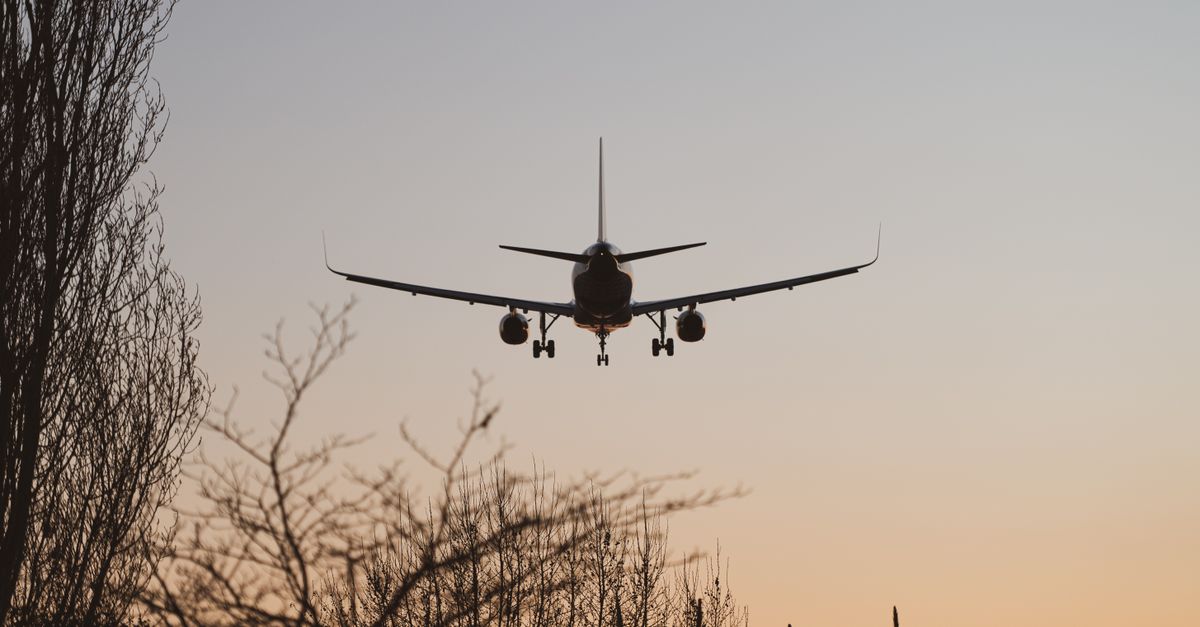
- From Europe: typical routing LHR/AMS/CDG → NBO or ADD → ZNZ, ~11–14 hr total[5]
- From the Gulf: DXB → ZNZ direct or via DAR, ~6–7 hr[5]
- From Southern Africa: JNB → ZNZ direct (seasonal) or via DAR, 3–4 hr[5]
- No transatlantic direct service to ZNZ
- Peak fare season: Jul–Aug (Kusi peak + European summer)
ZNZ is not a hub. Routings are one-stop from most European origins via Nairobi or Addis Ababa, and the peak Kusi window collides with European summer pricing. The October window, in addition to its wind-reliability merits, sits in a meaningfully cheaper fare band on most European origin routes.
Caveat: OpenFlights routes.dat lags real schedule changes by 6–18 months. Verify against carrier sources before committing to a routing.
🌡️ What the water is doing
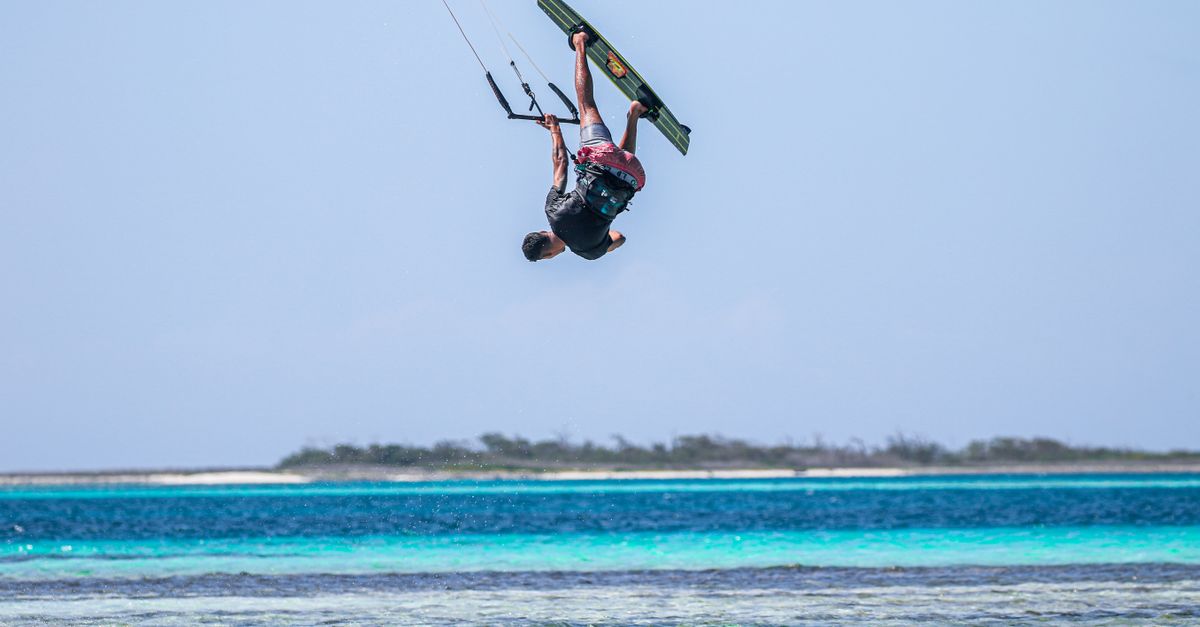
- Kusi SST: 25.5–26.2°C — 2 mm shorty for sessions over 2 hr[2]
- Kaskazi SST: 29.2–30.1°C — boardshorts, high UV[2]
- Lagoon visibility: anecdotally 8–15 m in Kusi, 4–8 m in Kaskazi (no systematic dataset)
- Marine context: turtle nesting at Mnemba Atoll seasonal Mar–Jul
- Offshore extension: Leven Bank for foilers, separate trip
The temperature swing matters more than riders expect. A July session in 25.5°C water with 22 knots of wind is genuinely cold after the first hour; bring thermal protection. A January session is the opposite problem — UV is the threat, not chill. Zanzibar — Mnemba Atoll and Zanzibar — Leven Bank sit in the broader marine picture but neither is a kite extension of Paje — they're separate trips with separate access logistics.
Caveat: we have no systematic visibility dataset for the Paje lagoon. Mnemba access rules change; check current status with operators before assuming a combined kite/snorkel day.
🗺️ How Paje compares to its peers

- El Gouna (Red Sea): thermal wind 85–90% reliable Jun–Aug, no tide problem[1]
- Kalpitiya (Sri Lanka): NE monsoon Dec–Mar, wider lagoon, lower tidal range
- Essaouira/Dakhla (Morocco): Atlantic trades, no monsoon dependency, cold water
- Fuerteventura: trade-wind consistency, foilable any tide
If your priority is the highest possible daily wind probability and you don't care about tides, Kitepower El Gouna is the more rational answer than Paje — the thermal system runs more reliably than the Kusi, and tidal range is negligible. If you want the Kaskazi-style monsoon experience without the 4-metre tide, Kitesurfing Lanka in Kalpitiya rides the same NE monsoon system on a wider, less tidally compromised lagoon. If monsoon seasonality itself is the wrong shape for your calendar, Ananas Kitesurfing on the Atlantic or René Egli on Fuerteventura offer trade-wind consistency without the SST trade-off Zanzibar makes you accept in July.
Paje wins on a specific combination: warm-water Kaskazi flat-water learning, plus a hard Kusi peak that delivers strong wind in a setting most kiters find more interesting than a desert. That's the niche. It is not the highest-percentage spot in the Indian Ocean, and it should not be sold as one.
Caveat: reliability comparisons across spots use the same Open-Meteo methodology, so they're internally consistent — but all of them inherit the same ERA5 limitations against in-situ data.
⚠️ What this article deliberately doesn't tell you
- The tidal data has a spatial gap. The IOC gauge is in Stone Town, 55 km north. Tidal phase at Paje lags by 15–25 minutes and the range may differ by ±0.3 m. No published correction factor for Paje specifically exists in the open literature.[3]
- Wind reliability is reanalysis, not observation. ERA5 at 10 m doesn't resolve sea-breeze reinforcement, headland acceleration, or reef-induced surface effects. Operator logbooks would sharpen this; they are not public.
- "Best months" averages erase ENSO variability. La Niña years strengthen the Kusi by 15–20%; El Niño years delay its onset by 3–4 weeks.[7] The month tables are climatology, not forecast.
Spot a mistake, have local logbook data we should incorporate, or run a school at Paje and disagree with our reliability figures? We want the correction. Email [email protected] — we update articles in place and credit contributing operators where the data warrants it.