
The February routing decision crystallizes at Bangkok's Suvarnabhumi check-in desk: your board bag is 192cm linear, the Ryanair connection out of Lisbon will charge €65 per sector[5], and you have three European legs before Morocco. That's €195 in board fees before you paddle out at Taghazout — where a week's rental from a local shaper runs roughly €80. The math is not subtle. But the math only works if you understand what the ocean actually requires at each stop, and that starts with sea surface temperature, not stoke.
NOAA OISST v2.1 monthly means[1] show a 16°C spread between the coldest nomad-relevant surf break in this analysis (Hossegor, France, ~13°C in January) and the warmest (Siargao, Philippines, ~29°C in August). That gap spans four wetsuit categories. No single piece of neoprene bridges it. No single board shape performs equally across the 1.2m mushburgers of Máncora[3] and the overhead reef passes of Bali's California Reef. The "one-board quiver" is a compelling idea and, for most serious nomads covering more than two climate zones per year, a functional lie.
What follows is not a ranked list of boards. It is a decision framework built from SST data, published airline fee schedules, and material specifications — the actual inputs to a gear decision when your quiver has to survive 14 airline transfers and perform in water ranging from 13°C to 30°C inside the same calendar year.
📐 Board Construction: What EPS/Epoxy Means for a Bag That Gets Thrown

- EPS epoxy weight: ~2.8–3.1 kg at 7'0"/48L; PU equivalent: ~3.4–3.8 kg — roughly 15–20% lighter[8]
- Soft-top at same length: ~4.2–4.8 kg; heavier but mechanically resistant to cargo-hold impact
- Linear dimension, 6'2" in padded bag: ~190cm — under IATA's 203cm general threshold, but above Ryanair's 158cm oversized trigger[5]
- Cargo hold temperature on equatorial routes: can exceed 50°C; relevant to foam deck delamination risk
EPS (expanded polystyrene) blanks laminated with epoxy resin are lighter than traditional polyurethane/polyester builds at equivalent volume, and they handle pressure changes better — the closed-cell foam structure doesn't absorb water through dings the way PU does. Firewire Surfboards has published spec comparisons showing their EPS constructions running 400–600g lighter than PU counterparts at the same dimensions. For a nomad on a 23 kg baggage allowance with wetsuit, fins, leashes, and wax already in the bag, that delta is real.
Soft-tops occupy a different position. The foam deck genuinely resists the kind of blunt-force ding a PU board collects from carousel handlers, but the trade-off is weight and, over time, UV degradation. A soft-top that's been through six months of equatorial sun in a black board bag — cargo holds on AirAsia's Southeast Asia routes regularly exceed 45°C — will show deck delamination that no amount of careful packing prevents.
Carbon-reinforced stringered shapes (marketed by several boutique shapers as "travel boards") sit between EPS and soft-top on the durability curve: lighter than PU, stiffer than EPS, expensive to replace if damaged. They make sense for a nomad with a fixed annual route and one or two checked-bag legs. They make less sense if you're rerouting opportunistically.
Caveat: We have no dataset of airline cargo damage claims by board construction type. The durability hierarchy above is based on material properties, not actuarial data. Any board can be destroyed by a single mishandled transfer. The financial risk of checking a custom shape is real and unquantifiable here.
📏 Volume for Varied Breaks: The One-Board Quiver Math
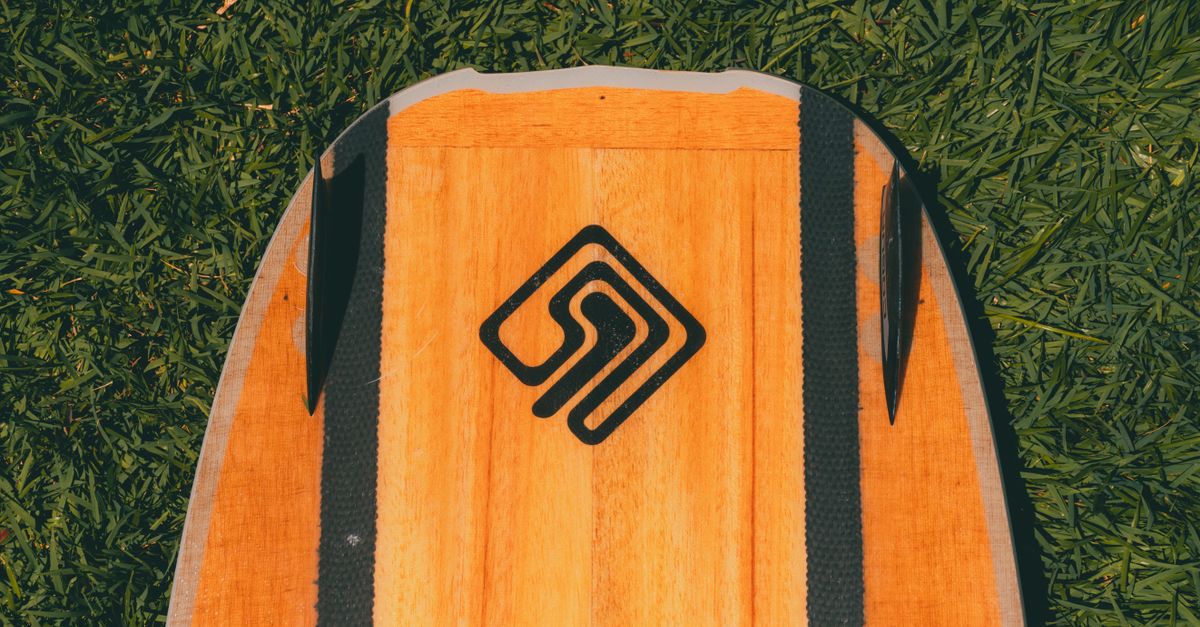
- Nomad do-everything volume target: body weight (kg) × 0.55–0.65L for intermediate surfers[8]
- 75 kg surfer: 41–49L target; a 7'2" mid-length typically lands at 44–50L
- Máncora (Peru) average wave face height, Jan–Mar: 1.2–1.8m (NOAA WaveWatch III hindcast)[3]
- California Reef, Bali: hollow reef break, rewards lower volume and rocker — the opposite end of the spectrum
A 75 kg intermediate surfer targeting a single travel board lands in the 44–50L range. At that volume, a 7'0"–7'4" mid-length with moderate rocker and a rounded pin or squash tail covers the most ground: it floats you through the waist-high beachbreak at Pontal de Baía Formosa (Brazil, ~26°C, boardshorts conditions year-round) without bogging, and it's manageable — if not ideal — on a solid overhead day in Morocco.
What it doesn't do is perform well on California Reef on a 6-foot swell with a 12-second period. That break rewards a board with 8–10L less volume, more tail rocker, and a narrower outline. The honest answer is that a true do-everything board for nomads covering both tropical mushburgers and quality reef passes doesn't exist — the mid-length is a compromise that keeps you surfing everywhere rather than excelling anywhere.
Local shapers are underused as a resource. Thierry Delbourg Surfboards in the Taghazout area shapes specifically for Atlantic beach and point break character. Depeyris Surfboards and Plonka Surfboards in the French Basque Country understand the cold, powerful beach breaks of that coast. Buying or commissioning locally — then selling before you leave — is a legitimate strategy that sidesteps the airline fee problem entirely.
Caveat: Volume numbers ignore rocker, concave, outline, and tail shape — variables that matter as much as liters in actual surf performance. Any single-number volume guide is a starting point, not a prescription.
🌡️ Wetsuit Thickness by Route: What the SST Data Actually Shows
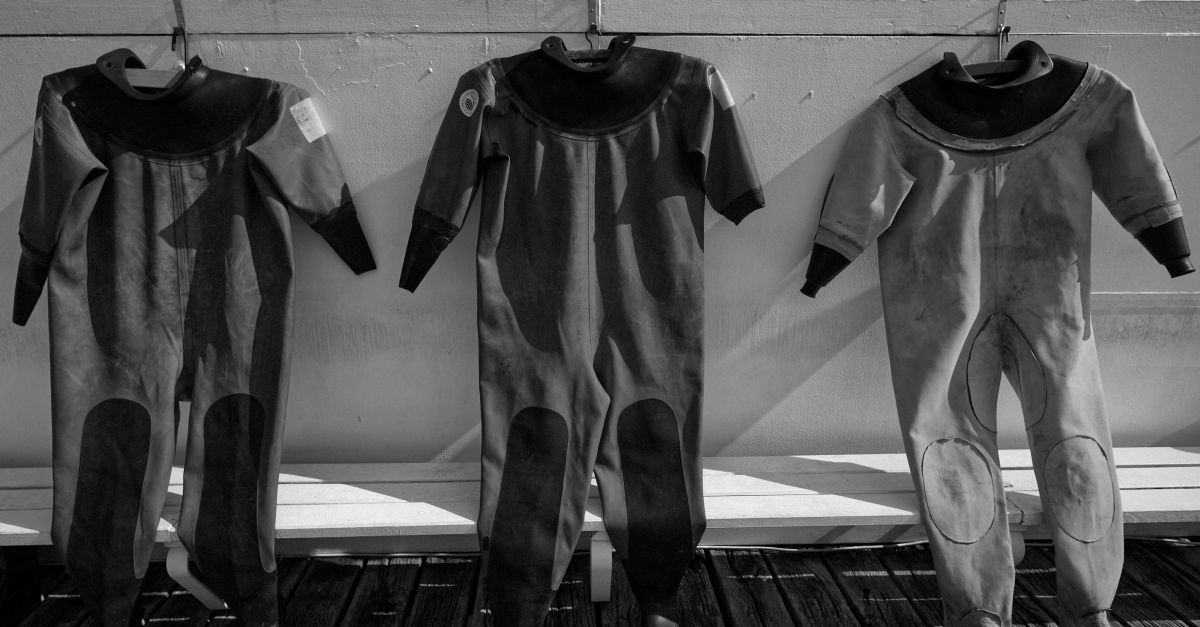
- Hossegor / California Street (France), January SST: ~13°C → 4/3mm minimum[1]
- Taghazout (Morocco) SST range: 17°C (February) – 22°C (September) → a single 3/2 covers the full year[2]
- Siargao / Black Forest (Philippines), August SST: ~29°C → boardshorts; 2mm spring suit for early mornings[1]
- Pontal de Baía Formosa (Brazil) July SST: ~24°C → 2mm shorty or boardshorts viable[1]
The Copernicus Marine Service Atlantic product[2] confirms that Taghazout's SST range — 17°C to 22°C across the year — is the most forgiving of any major nomad surf destination in this analysis. A single 3/2 full suit handles every month. That's the argument for Morocco as a base: the gear calculus is simple.
Portugal complicates it. Hossegor in January at 13°C requires a 4/3, and the 4/3 is dead weight for the six months you spend in Southeast Asia. The Atlantic arc route (Portugal → Morocco → Canaries) is the one nomad corridor that genuinely demands two wetsuits or a willingness to rent in the colder segments.
The Indo loop (Bali → Philippines → Mentawais) stays between 27°C and 30°C year-round[1]. A 2mm spring suit for dawn patrol at Black Forest on Siargao is the ceiling. Anyone checking a 4/3 on this route is carrying dead weight across every sector.
Caveat: SST is ocean surface temperature at a grid point, not perceived water temperature at the break. Upwelling, river outflow, and individual cold tolerance shift the practical threshold by ±2°C. Máncora's Humboldt Current makes it consistently colder than its 4°S latitude implies — our figures are climatological means, not real-time readings.
✈️ The Airline Fee Matrix: When to Leave the Board Home
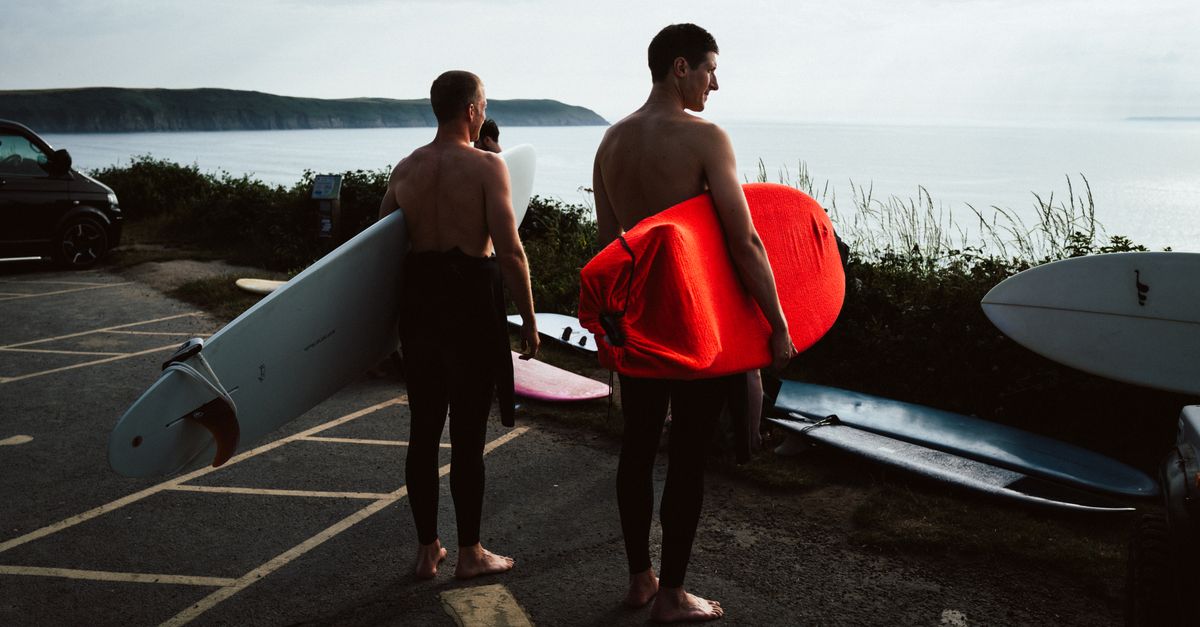
- Ryanair oversized sporting equipment fee: €40–€65 per sector (January 2025)[5]
- AirAsia: accepted as oversized baggage, max 23 kg, ~USD 30–60 per sector (January 2025)[6]
- Break-even point: if local rental costs ≤ (airline fee × number of sectors), leave the board home
- Three-sector European routing at Ryanair max rate: €195 in board fees before paddling out
The fee-per-sector vs. fee-per-itinerary distinction is where nomads consistently miscalculate. Ryanair charges per sector[5]. A Lisbon–Seville–Málaga–Faro routing — entirely plausible on a budget Atlantic arc trip — costs €120–€195 in board fees alone at published rates. A week's rental in Morocco from a shaper like Thierry Delbourg runs a fraction of that. The stalls for renting surfboards in Peru and Juicy Papaya Surfboards in Mexico represent the same logic on the Pacific Latin America route, where rental infrastructure is the strongest of any major nomad corridor.
The board-bag calculus inverts on long-haul single-sector flights. TAP's Lisbon–São Paulo routing charges a flat sporting equipment fee rather than per-sector stacking — making it worth checking a board for a Brazil stint of two weeks or more. Turkish Airlines and LATAM have similar flat-fee structures for intercontinental itineraries, though policies shift without notice.
Caveat: All fee figures are point-in-time (January 2025) from published schedules[5][6]. Airline policies change without notice and vary by booking channel — airport desk rates frequently differ from online pre-booking rates. Verify directly before travel.
🧴 Packable Wetsuits: What Lightweight Actually Weighs
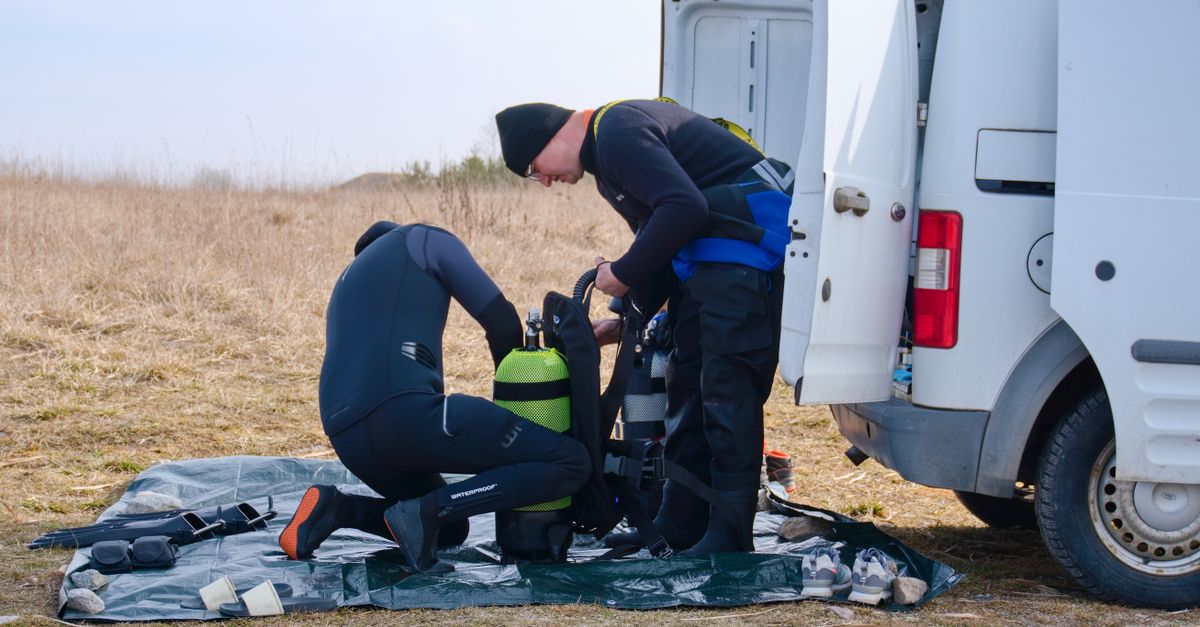
- Standard 3/2 full suit: 1.4–1.8 kg packed
- Limestone neoprene equivalents (e.g., Patagonia R1, Vissla 7 Seas): 1.1–1.3 kg — ~300g lighter
- Packed volume: 3/2 full suit compresses to ~4–5L in a dry bag; 2mm shorty ~2L
- Limestone neoprene thermal retention: marginally superior to petroleum neoprene at equivalent thickness
Three hundred grams sounds trivial until it's the difference between a 23 kg bag allowance and an overweight fee. Limestone-based neoprene — used in higher-end suits from several manufacturers — is both lighter and marginally warmer per millimeter than petroleum-based alternatives, according to lab testing. It also compresses more consistently, which matters when you're rolling a wetsuit into a dry bag inside a board bag that's already at dimensional limits.
The practical nomad wetsuit strategy for most routes: one 3/2 full suit in limestone neoprene (covers Morocco year-round, Brazil winter, Southeast Asia dawn patrol), plus a 2mm shorty that doubles as sun protection in the tropics. Total packed weight: ~1.8–2.1 kg. For the Atlantic arc nomad spending November–February in Portugal or France, a 4/3 is non-negotiable — but it can be stored or sold at a local shaper like Plonka Surfboards between stints rather than carried continuously.
Caveat: We have no longitudinal data on wetsuit degradation under nomad conditions — repeated airline compression, tropical UV, inconsistent rinse access. Manufacturer lifespan claims are based on recreational use patterns, not continuous travel.
⚠️ What this list deliberately doesn't tell you
- Board damage rates by airline or construction type. The claim that EPS epoxy survives cargo handling better than PU is based on material science, not a dataset of insurance claims or traveler-reported dings. We cannot quantify the financial risk of checking a custom board.
- Rental quality at any specific location. The Peru and Mexico rental spots linked above are in our database as geographic locations, not quality-rated operations. A rental stall may stock waterlogged foamies with missing fins. We can confirm the option exists; we cannot confirm it produces a surfable board.
- Real-time SST or swell. Everything in the wetsuit and break-character sections uses climatological means from NOAA OISST v2.1[1] and WaveWatch III hindcast[3]. Actual conditions on your travel dates will differ. Use Surfline, Windguru, or Magicseaweed for trip-specific forecasting.
If you've spotted an outdated airline fee, a shaper that's closed, or an SST figure that doesn't match your experience at a specific break, we want to know. This piece is maintained as a living document. Write to [email protected] with the spot name, the data point in question, and your source.