
On October 14, 2023, a dive boat left Larnaca marina at 8:47 a.m. with the surface at 26.4°C — warmer than most divers' pool sessions in Manchester that week.[1] The Zenobia lay at 42m below, her port-side railings coated in the same algal fuzz they'd worn since February 1980. The Cyprus dive shop had booked six divers that morning. In August they would have booked twenty. This is the shoulder-season paradox: the water is only two degrees off peak, and the boats are half empty.
Every October, roughly the same question surfaces in dive forums: where in Europe is the water still warm enough to skip the 5mm wetsuit? The answers usually arrive as vibes-based rankings — someone's memory of Rhodes in 2019, someone else's charter to Malta. We wanted to draw an actual line instead.
The 20°C isotherm — the boundary above which most recreational divers stay comfortable in a 3mm suit — moves south through European waters between September and November. Using NOAA OISST October climatology (1982–2023)[1] and Copernicus Marine Service Mediterranean SST reprocessed data,[2] we mapped where that line sits in October and paired each surviving location with OpenFlights route data[5] to answer the only follow-up question that matters: can you actually fly there next week.
What follows is a decision tool, not a ranking. If your departure hub isn't listed here, the isotherm map still applies — the flight math doesn't.
🌡️ The 20°C line and where it runs in October
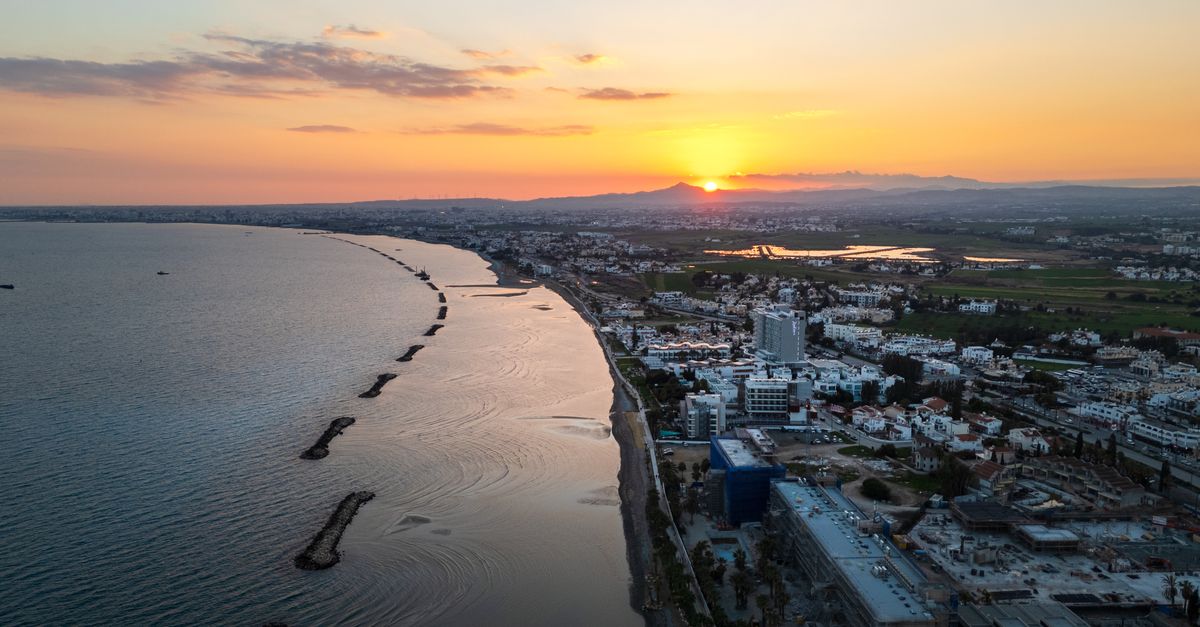
- Threshold: 20°C surface = 3mm wetsuit territory for most divers
- Above the line in October: Cyprus, Malta, Sicily, Crete, Rhodes, Canary Islands, Madeira, southern Dalmatia
- Below the line: northern Adriatic, Aegean north of Skiathos, Atlantic France, mainland Portugal north of Lisbon
- Peak-to-October cooling: 1–3°C across the region
- Data source: NOAA OISST v2.1, monthly climatology 1982–2023[1]
The line runs, roughly, from the Alboran Sea eastward across the Sicilian Channel, dipping south of the Peloponnese, curling around Crete and the Dodecanese, and reaching its warm terminus on the Levantine coast of Cyprus. In the Atlantic, the line dips far south to catch the Canary Islands and Madeira, both moderated by the Canary Current.
Twenty degrees is not a safety threshold — it's a comfort heuristic calibrated to the median recreational diver. A cold-adapted UK diver will happily dive 18°C; a diver based in Bali will find 22°C bracing. What 20°C does buy you is the option to skip the 5mm and gloves, which for a shoulder-season trip is the whole point.
Caveat: SST is surface temperature. The Eastern Mediterranean develops a sharp autumn thermocline, and October dives past 25–30m routinely hit 17–18°C at depth even when the boat ladder reads 26°C.[2] The isotherm map applies to the top 15–20m. Take a 5mm if you're planning deep wrecks.
✈️ Which routes actually operate in October

- LHR→LCA (Cyprus): ~4h30m, year-round, multiple daily
- CDG→MLA (Malta): ~2h45m, year-round, daily
- AMS→TFS (Tenerife): ~4h15m, year-round, multiple daily
- FRA→HER (Crete): ~3h00m, drops to 3–5x weekly after Oct 1
- Route data: OpenFlights routes.dat[5]
The route calculus in October is not about where planes fly — it's about where they still fly. Cyprus, Malta, and the Canaries maintain year-round frequency from every major European hub. Crete (Heraklion) keeps its winter schedule but at reduced frequency. Rhodes, Kos, and the smaller Aegean islands drop sharply between September 30 and October 15, with some routes vanishing entirely until May.
Expect roughly 30–50% fewer weekly seats on Aegean island routes in October compared to August peak, based on OpenFlights scheduled frequencies.[5] That translates to higher fares on the surviving flights, not lower — a counterintuitive shoulder-season quirk.
Caveat: OpenFlights reflects scheduled routes, not actual operated flights. Airlines cut low-load flights on short notice, and October is when they cut. Check the airline's own schedule page for your specific dates before booking a non-refundable dive package.
🐟 Cyprus: the warmest water on a European passport

- Water temp: 26–27°C surface (Copernicus CMEMS October climatology)[2]
- Flight from LHR: ~4h30m, year-round daily
- Visibility: 20–30m typical, operator-reported (unverified against independent data)
- Wetsuit: 3mm sufficient in top 20m; 5mm for the Zenobia at 42m
- OBIS species records, Cyprus EEZ October: dominated by Sparidae, Serranidae, and pelagic Carangidae[4]
Cyprus in October holds the warmest reachable water in the European sphere. The reason is thermal inertia: the Eastern Mediterranean is a nearly enclosed basin with limited exchange, and the water column built up through summer takes until December to shed its heat. October SSTs typically run only 2°C below the August peak.[2]
Dive infrastructure on the island is concentrated on the southwest coast — Paphos and Limassol — where operators like CyDive, Dive & Ski AquaNaut, and I Dive Cyprus run boats year-round. The headline site, the Zenobia, sits off Larnaca on the east coast, which means you're crossing the island for it. October northerly swell can affect surface conditions at Larnaca in ways it doesn't at Paphos.
Caveat: Species richness in the Eastern Med is lower than Atlantic-equivalent latitudes — this is a well-documented biogeographic reality, not a criticism of Cyprus.[7] If you're diving for pelagic megafauna encounters, this is the wrong basin. If you're diving for warm water, clear viz, and wrecks, it's the right one.
🏝️ Malta and Sicily: the central Mediterranean midpoint
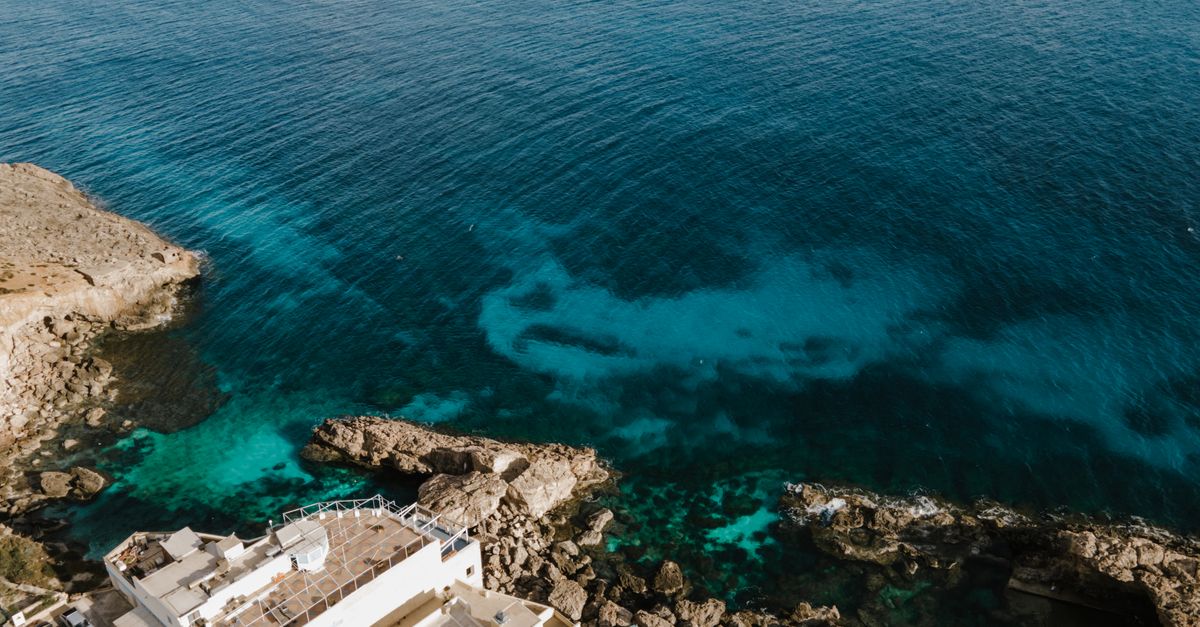
- Water temp: Malta 24–25°C; Sicily south coast 23–24°C[1]
- Flight: FRA→MLA ~2h20m; AMS→MLA ~2h50m, both year-round
- October operator load: ~40–60% of August peak (operator-reported estimate)
- Wetsuit: 3mm above 20m; 5mm below
Malta sits at the geographic and thermal midpoint of the isotherm and offers the shortest flight time from central European hubs of any ≥20°C destination. Its dive infrastructure runs year-round — unlike much of Greece, Malta does not seasonally shut down.
The Maltese archipelago is documented in dive media to the point of saturation, which creates a small responsibility: the Azure Window collapsed in March 2017 and no longer exists. Any article treating it as a current dive attraction is out of date. The Blue Hole nearby remains, but it's a boat-traffic site even in October.
Sicily's southern coast — from Marina di Ragusa to Pozzallo — runs 1°C cooler than Malta but is served by direct flights into Catania (CTA) and Palermo (PMO) from most European capitals.
Caveat: Malta's October visibility, often quoted at 25–40m in operator marketing, is not independently verified in the datasets we have access to. Treat the numbers as directional, not measured.
🌊 Southern Greece: the closing window
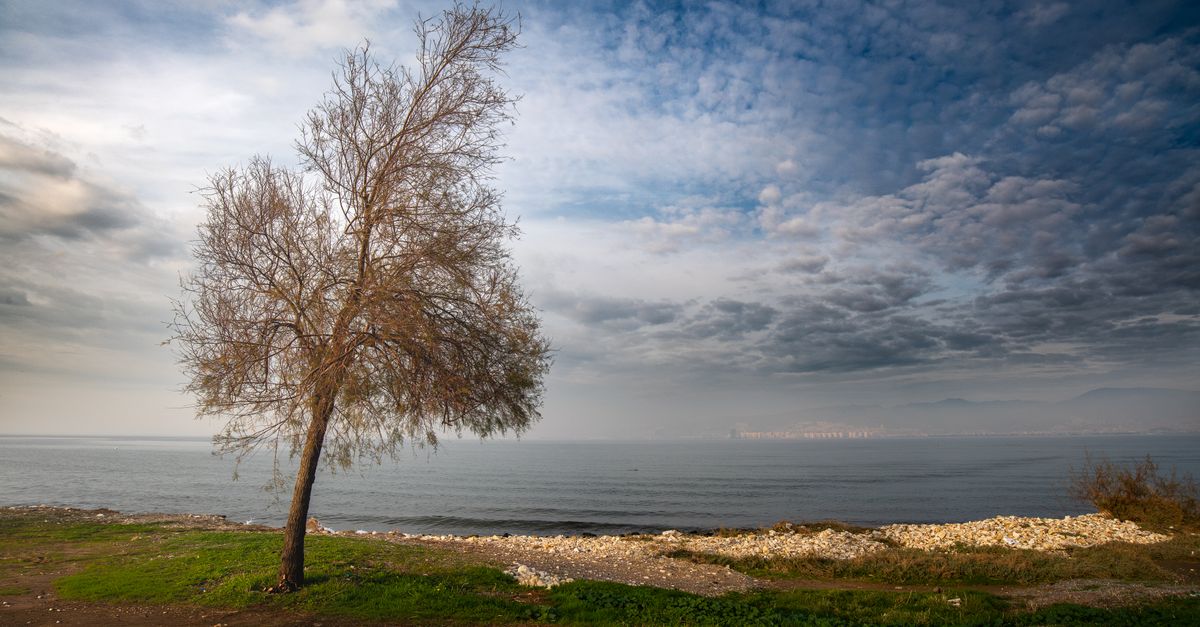
- Water temp: Crete north coast 22–23°C; Rhodes 23–24°C; Kos 22–23°C[1]
- Meltemi wind: typically weakens by late September
- Flight to HER: ~3h from FRA, year-round; RHO year-round but reduced
- Wetsuit: 3mm sufficient
- Data gap: OBIS records for Aegean October are sparse[4]
The Aegean cools faster than the Levantine basin — less thermal mass, more wind mixing — but Crete, Rhodes, and the southern Dodecanese hold above 22°C through October. The genuine shoulder-season advantage here is the meltemi: the persistent northerly wind that batters Aegean diving from June through August typically weakens by late September, leaving October with calmer surface conditions than peak summer.[6]
The tradeoff is operator availability. Kos and Karpathos see dive shops closing between October 1 and October 15 without updating their online listings. Greek dive operator seasonality is one of the worst-documented aspects of Mediterranean diving in open data. Call ahead. Then call again the week before.
Caveat: OBIS and GBIF October records for the Aegean are sparse — absence of data is not absence of marine life, but we can't make strong species claims for this region in this month.[4][7]
🌴 Canary Islands and Madeira: the Atlantic outliers

- Water temp: Tenerife/Gran Canaria 22–24°C; Lanzarote 22–23°C; Madeira 22°C[3]
- Flight: LHR→TFS ~4h15m; MAD→LPA ~2h20m, multiple carriers year-round
- Pelagic season: October–November brings whales and rays around El Hierro and La Palma
- Wetsuit: 3mm above 20m; expect cooler thermocline below
The Canary Islands run on a different thermal system than the Mediterranean. The cold Canary Current moderates summer highs, capping them below 25°C, but also delays autumn cooling — October is arguably the best diving month here. Post-summer crowds thin. Pelagic season opens. Water stays warm.
There's an editorial honesty problem: the Canary Islands are a Spanish autonomous community 100km off the Moroccan coast, and readers searching "Europe October diving" may not consider them in scope. Fair. We include them because they satisfy the isotherm criterion on a European passport with year-round direct flights. If you're already willing to fly that far, Cape Verde sits another 1,400km south at ~26°C in October — not Europe, but reachable from Lisbon in five hours.
Caveat: Canary Islands October SSTs vary by 1–2°C between the western (cooler, El Hierro/La Palma) and eastern (warmer, Fuerteventura/Lanzarote) islands. The 22–24°C range spans both.
📉 The Adriatic borderline: honest data
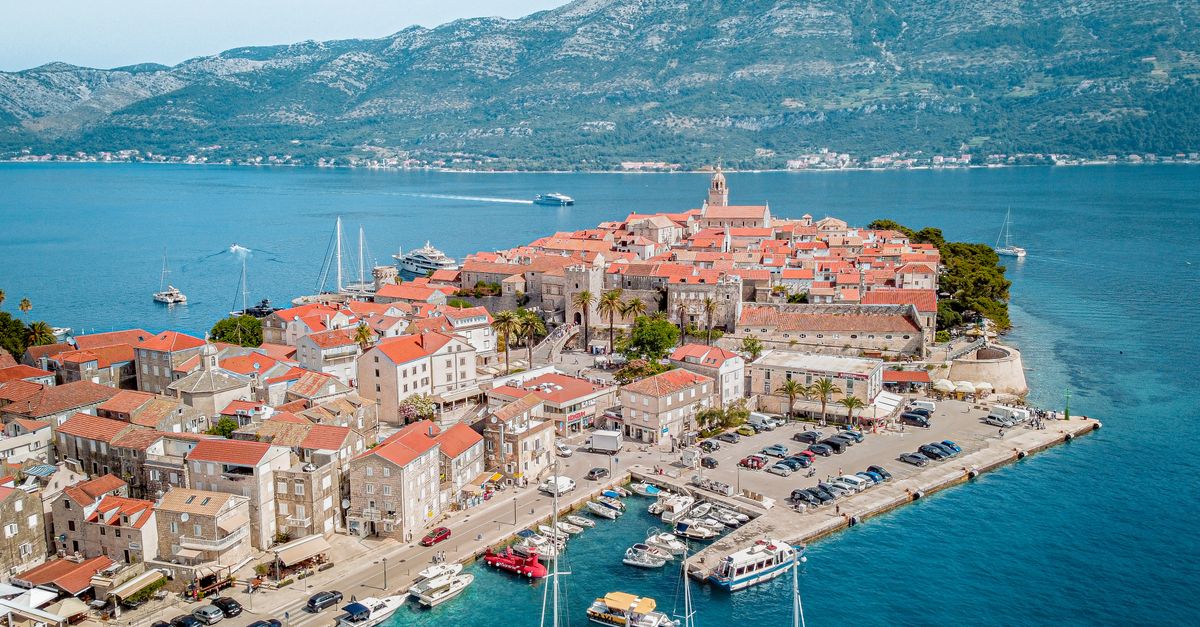
- Water temp: Dubrovnik area 20–21°C (mean); Krk 17–18°C[1]
- Interannual variability: ~1.5°C standard deviation on Adriatic October SST
- Visibility: often better in October than August (reduced algal bloom)
- Wetsuit: 5mm honest recommendation, not 3mm
Southern Dalmatia sits exactly on the threshold. In a warm year, Dubrovnik in October clears 21°C comfortably; in a cold year, it doesn't. Standard deviation on Adriatic October SST is roughly 1.5°C, which means the isotherm line drifts north or south by 100–200km depending on the year.
Krnicadive in central Istria sits below threshold most years. Dive Loft Krk in the northern Adriatic runs 17–18°C in October — well below our line. We link them here not as October recommendations but as honest data points showing where the isotherm excludes the region. The genuine shoulder-season advantage the Adriatic offers — better visibility than summer, no algal bloom, empty sites — comes at the cost of colder water. That's the tradeoff, and no vibes-based ranking will change it.
⚠️ What this list deliberately doesn't tell you
- SST is not dive-site temperature. All figures are satellite-derived surface climatology. Sub-surface October profiles are not systematically available in open data for most of these locations. A 24°C surface reading does not mean 24°C at 30m — the Eastern Med thermocline routinely drops water to 17°C by 30m in October.[2]
- Operator seasonality is opaque. Whether a specific dive shop is actually running trips in October — not just listed as open — is not captured in any dataset we have. Some southern Greek and Croatian operators close between October 1 and November 1 without updating listings. The flight data tells you the plane exists; it doesn't tell you the dive boat is in the water.
- 20°C is a heuristic, not a standard. It's calibrated to the median recreational diver in a 3mm suit. Cold-water divers find 18°C fine; tropical-adapted divers want 24°C minimum. Read the threshold as a starting point for your own comfort calibration, not as a rule.
Spot a mistake, an outdated route, or a dive operator we've mischaracterised? We'd rather fix it than let it sit. Write us at [email protected] — corrections that come with a source get priority, and we credit contributors in the changelog.