
January 18th, 2024. The dive boat Poseidó leaves L'Estartit harbour at 09:40 with four divers aboard — capacity twelve. Surface temperature at the Medes Islands drop-in point reads 13.4°C on the dive computer; the Secchi disk goes past 28 metres before it fades.[2] Under water, a Flabellina affinis the length of a fingernail grazes hydroids on the northeast wall of the Dofí Sud pinnacle. The nearest other diver is on a different boat, a kilometre away.
This is the argument, compressed into one dive: cold water is not a punishment tax you pay for European convenience. It is the mechanism that produces the conditions the tropics can't match in January — flushed water columns, empty sites, and macro life clustered around winter spawning cycles.
The default winter routing for northern-European divers sends them to Hurghada or Sharm el-Sheikh. That defaults exists for a reasonable reason (22°C water, hard coral, high shark-encounter probability) and a lazy one (nobody has done the quantitative comparison against the western Mediterranean in the same month). This piece runs that comparison using Copernicus SST reanalysis, OBIS occurrence records, OpenFlights route data, and ICAO's emissions methodology. Some of the argument survives contact with the numbers; some doesn't. We'll say which.
🌡️ The physics argument: why 14°C produces 30-metre visibility

- Water temp (Medes Jan mean): 13.4°C, 1993–2023 climatology
- Visibility (Jerlov Type I–II western Med, winter): 25–35 m[3]
- Chlorophyll-a (Med winter): 0.08–0.15 mg/m³ vs. summer 0.4+ mg/m³[2]
- Red Sea comparison (Hurghada Jan): 22.1°C, in-shore visibility 15–20 m
- Mechanism: convective mixing flushes photic-zone particulates downward
Winter cooling at the surface makes the top layer denser than the water below it. That density inversion collapses the summer thermocline and drives convective mixing — organic particulates that would otherwise sit suspended in the photic zone get carried down. What remains is water that behaves optically like Jerlov Type I–II: the same classification used for clear open-ocean water at low latitudes.[3] Copernicus Ocean Colour data shows Mediterranean chlorophyll-a in January routinely below 0.15 mg/m³ across the Balearic and Ligurian basins, a fivefold reduction from August peaks.[2]
The Red Sea, for comparison, sits at 22°C in January with visibility that in-shore reef guides typically log at 15–20 m — degraded by human activity around Hurghada and by warm-water plankton that never gets flushed by a thermal overturn. Offshore Red Sea sites do better; nobody flying budget carriers to Egypt is diving them without a liveaboard.
Caveat: the 25–35 m figure is a climatological average. A single Tramontane or Mistral event can suspend sediment and cut visibility to <5 m for 3–7 days. Open-Meteo's marine API gives 7-day swell forecasts; it does not give seasonal guarantees.[4]
🗺️ Five sites, five different arguments for January
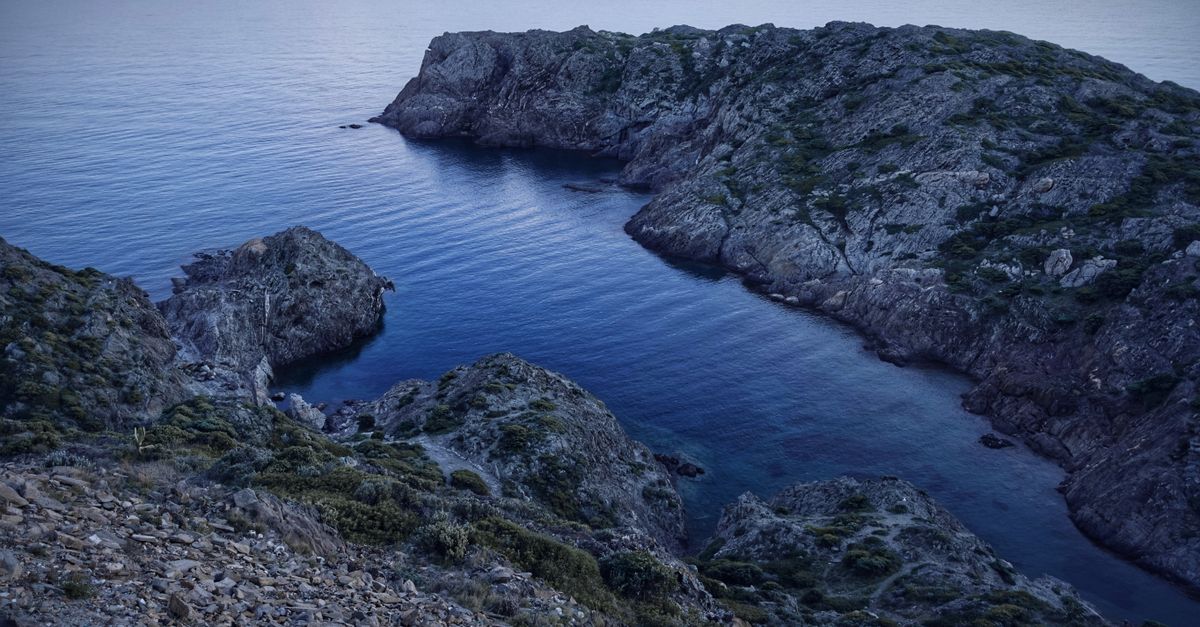
- Medes Islands: MPA daily quota 450 divers in summer; winter loads <30/day (anecdotal, operator logs)
- Cap de Creus: current-driven walls, cephalopod aggregations Nov–Feb
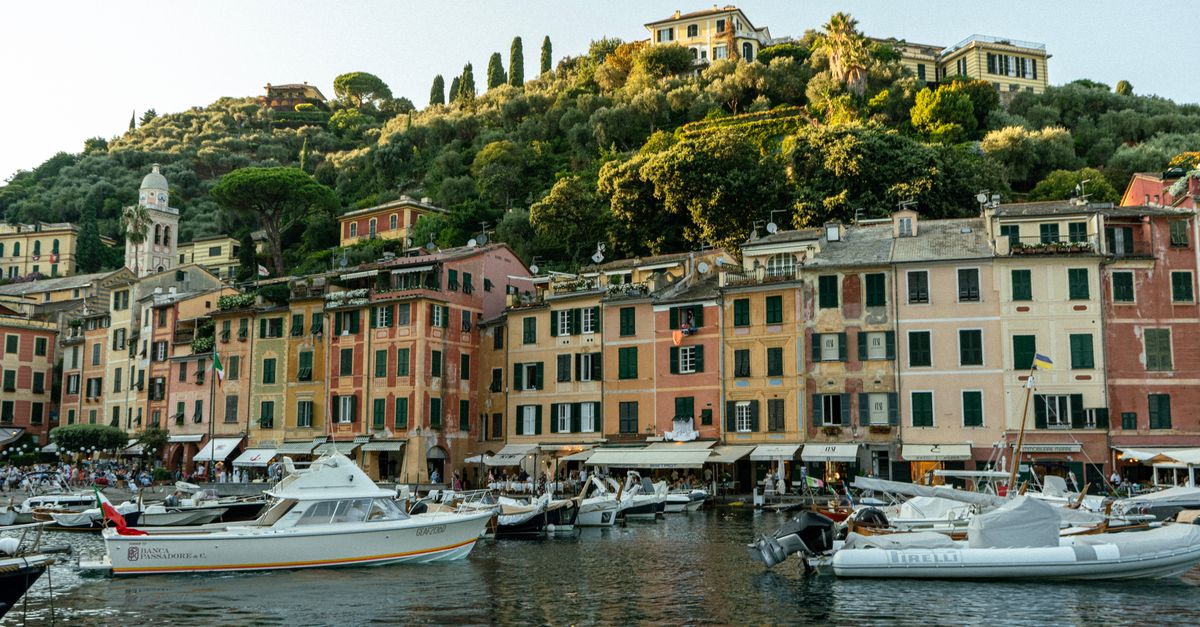
- Portofino MPA: red gorgonian fields 25–40 m, no summer thermocline haze
- Gozo Inland Sea: solar elevation 31° at noon on Jan 15 vs. 71° in July — cave light geometry
- Ustica Black Caves: OBIS lists 47 nudibranch species within 10 km; occurrence cluster Jan–Mar[5]
The anti-listicle move: none of these sites is "the best," and each answers a different winter question. Medes offers density collapse — an MPA that's rationed hard in summer becomes almost empty in January, and the wall gorgonians at 20–35 m are visible from further away. Cap de Creus, further north on the same Catalan coast, catches Tramontane-driven currents that concentrate Octopus vulgaris during their November-through-February spawning window.[6]
Portofino is the gorgonian argument in its purest form: the deep red Paramuricea clavata fields at 30–40 m are always there, but in July a warm surface layer refracts and scatters the light before it reaches them. In January the light column is uniform. Gozo's Inland Sea cave is a geometric argument — the low winter sun angle produces the diagonal light shafts through the tunnel that make the site photograph-worthy, and the arithmetic is simple: at 36°N latitude, solar elevation on 15 January at noon is 31°, versus 71° in mid-July. Different sun angle, different dive.
Ustica is the macro argument. OBIS returns 47 nudibranch species occurrences within a 10 km radius of the marine reserve, with a documented January–March cluster.[5]
Caveat: the Medes winter diver-count is from dive centre logs, not from the Generalitat de Catalunya, which does not publish monthly MPA visitor statistics. The <30/day figure should be treated as directional, not precise.
🤿 The drysuit question: honest gear calculus
- Rental cost: €35–60/day at western Med operators (peak summer pricing; winter varies)
- Learning curve: 2–3 dives to stabilise buoyancy — a 5-day trip loses ~1 day
- 7mm wetsuit + hood + gloves: adequate at 13°C for dives <45 min per thermal physiology literature
- Incapacitation threshold (DAN/PADI): clinically documented below 10°C, not 13–14°C
- Confirmed drysuit rental: Portofino, Gozo (peak-season inventory)
I am not going to tell you drysuits are easy. If you've never dived one, your first 30-minute dive at Medes will involve at least one uncontrolled ascent from suit-air migration, and probably a lot of finning to hold trim. Two to three dives to get comfortable is realistic, which means a 5-day trip effectively delivers 4 days of dives you'd want to remember.
The alternative — 7mm wetsuit with hood and 5mm gloves — works at 13°C for shorter dives. Tipton's thermoregulation work at Portsmouth puts the acute cold-water risk threshold well below what the western Med offers in January. Uncomfortable is not dangerous. Cold hands after 40 minutes at 25 m is uncomfortable. Hypothermia at 13°C in a properly fitted 7mm on a 45-minute dive is not the failure mode; missing a deco stop because you're distracted by cold is.
The Croatian drysuit culture, useful to look at even if you're diving Spain: operators like CorrectDiving Krk run winter Adriatic dives at similar temperatures with normalised drysuit rentals as part of a standard year-round operation.
Caveat: drysuit rental inventory at smaller operators (Ustica, Cap de Creus) is not verified in our database for January. Call ahead. Operator listings in our spot database reflect peak-season staffing.
✈️ The flight comparison the Red Sea articles never run
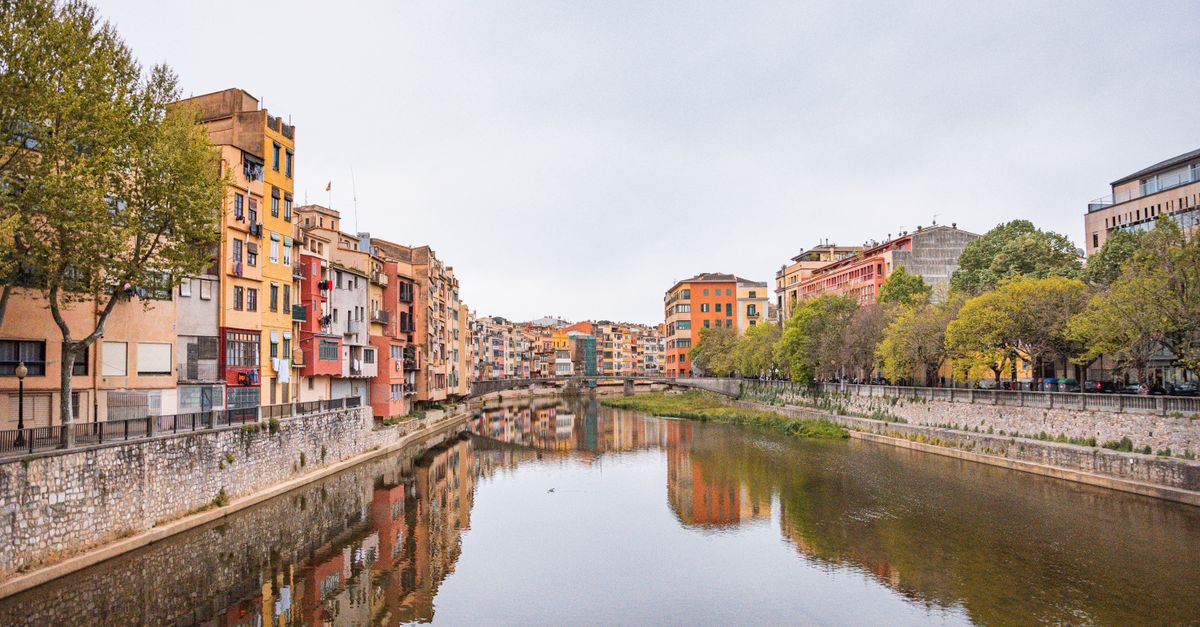
- LHR → GRO (Girona): ~2h05m, Ryanair operates year-round
- LHR → HRG (Hurghada): ~4h55m, multiple carriers, January is peak Red Sea season
- Carbon proxy (ICAO methodology): LHR→GRO ~0.08 tCO₂e/pax; LHR→HRG ~0.31 tCO₂e/pax[9]
- Visa: Egypt requires visa on arrival ($25); Spain/Italy/Malta EU/UK straightforward
- Fare direction in January: Med low-season, Red Sea high-season
OpenFlights route data shows the Girona corridor from London and northern-European hubs is operated year-round by low-cost carriers. January is Costa Brava's dead season, which is exactly why the diving is quiet. Meanwhile Hurghada in January is the peak Red Sea fare window because that's when northern Europe wants to be warm.
The carbon differential is a factor-of-four short-haul-versus-long-haul comparison using ICAO's per-passenger methodology.[9] We are not making a moral argument. We're pointing out that the assumption "the Red Sea is easier and cheaper in winter" is roughly the opposite of what the flight schedules show.
Caveat: OpenFlights data reflects scheduled routes, not real-time seat pricing. ICAO's calculator is a simplified model — not full lifecycle. Fares vary week to week.
🐙 What lives there in winter: the macro case from OBIS
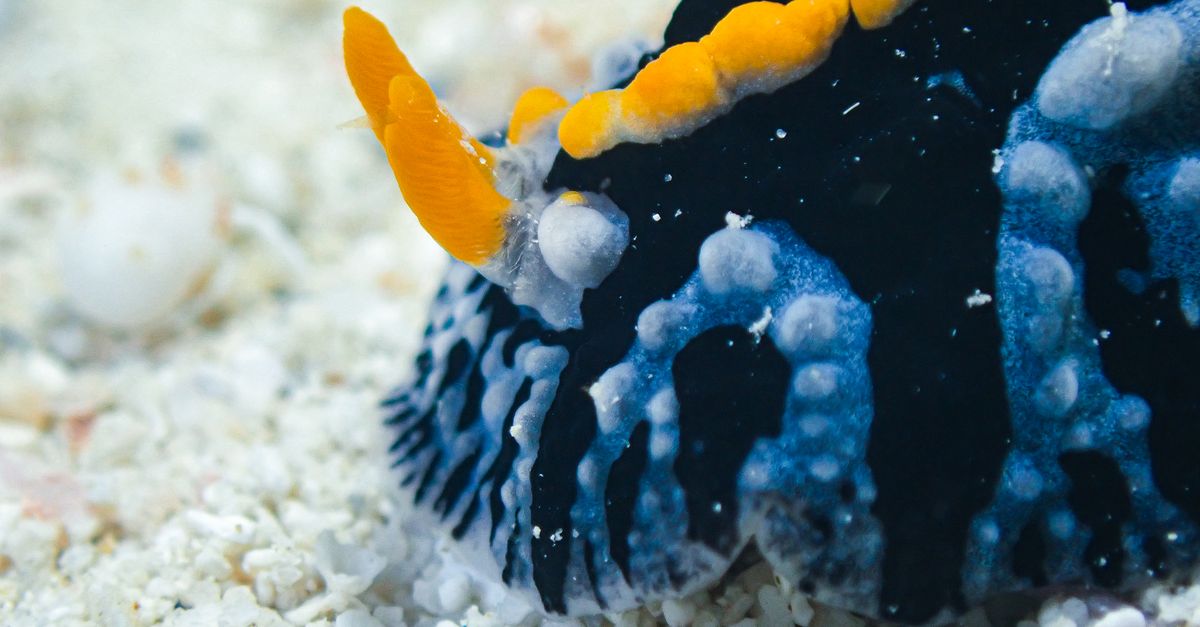
- Medes Islands OBIS: >120 macroinvertebrate species within MPA boundary; Jan–Feb records include Flabellina affinis, Hypselodoris picta[5]
- **Octopus vulgaris:** documented Mediterranean spawning Nov–Feb (Mangold, 1983)[6]
- **Paramuricea clavata (red gorgonian):** Portofino MPA deep-wall assemblages
- **Posidonia oceanica:** IUCN-listed seagrass, meadow structure visible in winter clarity
- Sample bias: OBIS records skew heavily to summer survey seasons
The species-specific case matters because "amazing macro" is not an argument. Flabellina affinis — a violet aeolid nudibranch grazing hydroids — is what you're photographing at Medes in January. Hypselodoris picta, larger and more contrasting, is what you're photographing at Ustica. Octopus vulgaris in winter mating aggregations is what Cap de Creus operators report from December through February, consistent with the phenology Katharina Mangold documented forty years ago.[6]
The equivalent argument on the eastern Mediterranean side is less quantified but structurally similar — operators like Seals Diving Area report the same seasonal macro concentration at comparable latitudes, though the Aegean's winter thermal profile is different enough that we're not extrapolating.
Caveat: OBIS records are taxonomist-submitted and structurally biased toward summer survey seasons. The claim that winter macro density is higher than summer is supported by spawning biology and operator reports, not by a systematic winter-vs-summer OBIS count. Absence of records ≠ absence of species.
📊 The honest comparison: Med winter vs. Red Sea winter
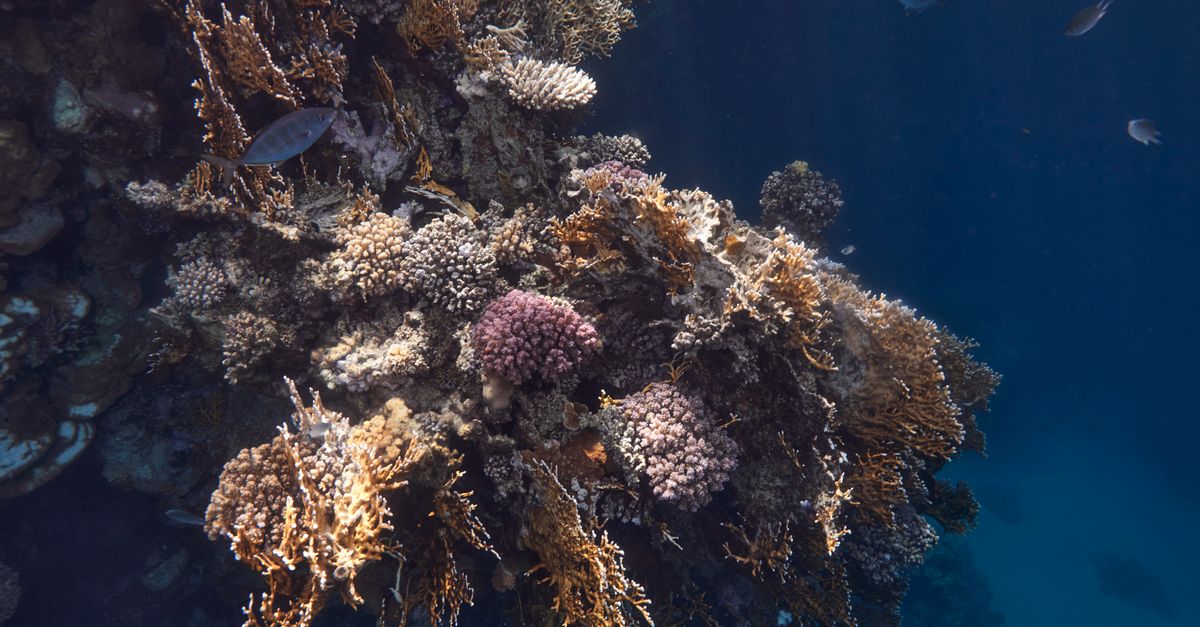
- Hard coral cover: Red Sea 40–60% at Marsa Shagra and Wadi Lahami; Mediterranean 0% (no hermatypic coral)
- Reef shark encounter probability: Wadi Lahami operator-reported >80% of dives Jan; Med winter reef shark <5%
- OBIS species richness (20 km radius): Medes ~340 recorded species; Marsa Shagra ~580[5]
- Water temperature: Red Sea +8°C advantage in January
- Documentation bias: Red Sea has decades more systematic marine survey history
If your priority is hard coral or a reasonable probability of seeing a reef shark on a normal shore dive, book the Red Sea. Blue Water House Reef, Marsa Shagra, and Wadi Lahami are genuinely better for that specific combination of goals. German-market operators like Diving.de Akassia exist for a reason: the infrastructure is mature, the water is warm, and megafauna is a real probability rather than a lottery.
The Mediterranean does not compete on coral, sharks, or warm water. It competes on gorgonian architecture, benthic macro, low diver density, and short flights.
Caveat: OBIS richness figures reflect recorded species, not actual richness. The Red Sea's higher count is partly a survey-history artefact. We're comparing databases, not ecosystems.
🧊 Who this suits — and who it doesn't
- Diver profile: certified drysuit diver, or experienced wetsuit diver comfortable at 13°C
- Geography: based in northern Europe within 3h of a Med gateway airport
- Interest: macro/benthic/gorgonian over megafauna/coral
- Window: January 15 – March 10 (early Jan storm risk, late March SST climbing)
- Book Red Sea instead if: coral, sharks, water >20°C are non-negotiable
Cold-tolerance is self-assessed. Fitness is self-assessed. This piece does not replace a dive medical or an operator briefing.
⚠️ What this list deliberately doesn't tell you
- Operator winter hours are poorly documented. Ustica and Cap de Creus operators may close or reduce schedules December through February. Our spot listings reflect peak-season data. Confirm directly before booking.
- The visibility claim is a climatological average. A single Mistral or Tramontane event can drop visibility to <5 m for a week. Copernicus and Open-Meteo give you forecasts, not guarantees.[2][4]
- The OBIS macro-density argument has a sampling-bias problem we can't fully correct. Winter surveys are underrepresented. The seasonal-concentration claim rests on spawning biology and operator testimony as much as data.
Spot a mistake, an outdated operator listing, or a citation you can't reproduce? Email us at [email protected] — we correct fast and we credit corrections in the article footer.