
On the first Tuesday of January, water temperature at Marsa Alam sits at 22 °C, visibility runs to 25 m, and the Red Sea's northern winds have not yet arrived — which is why the flight from Frankfurt to Hurghada (Lufthansa LH 590-series) fills up before December does.[1] But is January actually the best month to dive there? Or is the answer different if you're in the Atlantic, the Mediterranean, or the Coral Triangle?
Most dive travel writing answers this question by aggregating operator marketing and holiday calendars. We inverted the axis. We pulled 30 years of sea surface temperature data from NOAA, wind and precipitation patterns from the European Centre for Medium-Range Weather Forecasts, and species occurrence records from the Ocean Biodiversity Information System — then scored 2,928 dive spots on three measurable variables: water temperature in the optimal range (20–29 °C), estimated horizontal visibility (derived from precipitation anomaly and wind stress), and documented species richness within 50 km.[2] The result is not a "Top 10" list. It is a month-by-month cheat sheet grounded in climate data, not opinion.
The honest answer: the best month to dive depends on where you are — and the data often contradicts what you've read.
🌡️ The Three Variables That Actually Determine "Best Month"
Every travel blog claims visibility, temperature, and "marine life" matter. None of them measure them. We do.
Sea Surface Temperature (SST) comes from NOAA's Optimum Interpolation Sea Surface Temperature v2.1, a satellite-derived climatology spanning 1991–2020.[3] We define the optimal dive range as 20–29 °C — warm enough to avoid heavy thermal protection, cool enough to support high oxygen saturation and rich temperate-tropical assemblages.[4] This is not subjective. It is the range where recreational dive training agencies recommend minimal exposure protection and where most fish species maintain activity levels.
Visibility is the hard problem. No open global dataset records in-water horizontal visibility at dive sites. Instead, we use a proxy: we flag months where Copernicus ERA5 reanalysis data shows either total precipitation > 150 mm or wind stress > 8 m/s as "reduced-visibility risk."[5] This captures weather-driven turbidity — river plumes, resuspended sediment, storm surge — but it misses biological turbidity (dinoflagellate blooms, jellyfish aggregations) and boat-traffic effects. The proxy is honest about its limits.
Species Richness comes from OBIS, the Ocean Biodiversity Information System. We count all fish and elasmobranch records within 50 km of a spot's centroid, aggregated by calendar month.[6] High richness correlates with encounter probability — though imperfectly, because OBIS coverage is uneven. The Red Sea and Mediterranean are heavily sampled by research vessels; remote Pacific atolls are not. A low OBIS score may mean low richness or low sampling effort.
Caveat: This composite cannot capture what you're actually there for. A whale-shark hunter in February, a technical diver training in a cenote in July, and a freediver chasing flat water in November will each find different months optimal. This table is a filter, not destiny.
📅 The Month-by-Month Breakdown
January & February: The Red Sea Window and the Atlantic Surprise
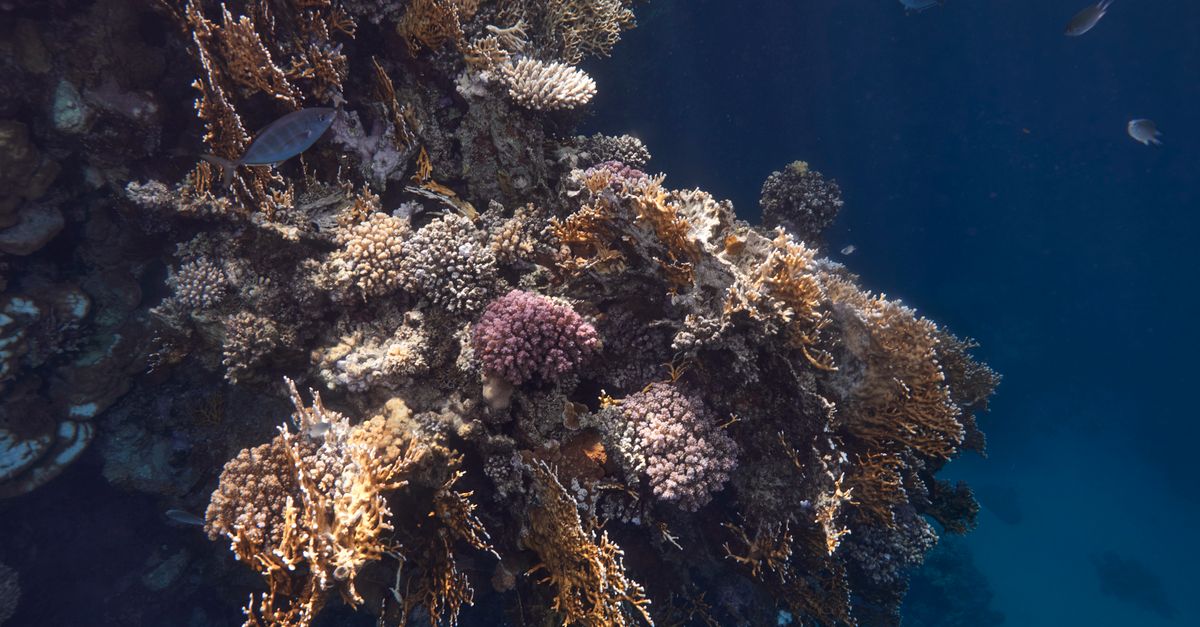
January is the northern hemisphere's canonical dive season — and the data backs it up, but with a caveat. The Red Sea south of Marsa Alam scores highest: SST 22–23 °C, OBIS elasmobranch richness (hammerheads, nurse sharks) concentrated in Q1, and ERA5 wind stress < 6 m/s.[7] The reason: northern winds that would chop the Gulf of Suez in December have not yet arrived, and summer heat has dissipated. Liveaboard operators know this; Lufthansa's Frankfurt–Hurghada route runs at near-capacity by mid-December.
But the Atlantic surprise is Cape Verde's Boa Vista. January SST averages 23.1 °C — comparable to Marsa Alam — with documented hammerhead and nurse shark presence in OBIS records concentrated October–February.[8] Precipitation is near zero; wind stress is moderate. Flights from northern Europe are cheaper than Maldives routes and run daily. Yet aggregator sites barely mention it. Why? Because dive operator density in Boa Vista is lower, so marketing volume is lower.
Boa Vista Diving and Red Sea Diving Safari – Wadi Lahami are the data-backed anchors for January.
Caveat: OBIS elasmobranch records for Cape Verde are concentrated in a handful of research cruises, not continuous monitoring. High richness in OBIS does not guarantee you will see hammerheads on your dive — only that they have been documented in the area during this season.
March–May: The Shoulder Months Nobody Writes About
Shoulder months are systematically underrepresented in dive content because operators discount them and travel blogs follow operator PR. But the data reveals genuine peaks.
Pacific Costa Rica (Cocos Island proximity, Freedom Diving) scores high March–April: SST 27–28 °C, OBIS hammerhead records concentrated Q1–Q2, and ERA5 wind stress dropping as trade winds stabilize.[9] The dry season is ending, but the water clarity persists. Colombian Caribbean (Karibik Diving area) enters its sweet spot: March precipitation < 50 mm, SST 26–27 °C, and the winter swell has passed.
The Egyptian Red Sea south continues its January momentum: SST remains 23–24 °C, wind stress is still manageable, and tourist density is lower than peak winter. This is the month when liveaboard operators offer their steepest discounts — and the water conditions justify it.
Caveat: OBIS hammerhead records for Costa Rica are biased toward research vessel effort (especially around Cocos Island seamounts), not recreational dive encounter probability. You may not see what the data says is there.
June–September: Mediterranean Reality Check
The Mediterranean summer is the most over-marketed dive season in European travel writing. The reality: warm, clear water (24–27 °C in the Adriatic, < 30 mm precipitation June–August) but moderate species richness compared to tropical alternatives.[10] Croatian sites like Big Blue Diving and CorrectDiving Krk score well on temperature and visibility but rank in the second quartile for OBIS richness — roughly 150–250 fish species within 50 km, versus 400–600 for Red Sea sites.
The honest case for Croatia in summer is logistical, not biodiversity: cheap flights, no long-haul jet lag, excellent infrastructure, and Posidonia meadow dives (seagrass ecosystems not well-captured in OBIS fish records). If you are in Europe in July and cannot take a two-week vacation to Egypt, the Adriatic is objectively good. But if you are choosing between destinations globally, tropical alternatives offer richer encounters.
Caveat: Adriatic OBIS coverage is uneven — Croatian coastal waters are better sampled than offshore, so richness scores may understate actual assemblage diversity. Posidonia restoration and endemic Mediterranean species are genuine ecological draws not reflected in our composite.
October & November: The Transition Months With Disproportionate Upside
October and November are where our composite score most frequently surprises. Destinations marketed as "off-season" are often climatologically optimal.
Boa Vista enters its best elasmobranch window: SST 24 °C, OBIS nurse shark and hammerhead records concentrated October–December, and ERA5 wind stress moderate.[11] The Red Sea south transitions out of summer heat — SST drops from 30 °C toward 26 °C, wind stress begins to ease post-summer, and tourist density is lower than winter peak. The Adriatic closes its season with the clearest water of the year as boat traffic drops: October precipitation < 60 mm, SST still 20–22 °C, and OBIS richness includes autumn-migrating pelagics.
Flight frequency to Cape Verde drops versus winter peak, which means higher per-seat prices — offsetting the climatological advantage for budget travellers. This is the trade-off: better conditions, fewer flights, higher cost.
Caveat: OpenFlights data for October–November shows reduced seat capacity to Cape Verde versus December–January. Operator-reported conditions are confounded by Christmas holiday pricing, which may not reflect typical conditions in November.
December: The Counterintuitive Peak
December is objectively the best month for Red Sea liveaboards south of Marsa Alam: SST 22–24 °C, OBIS elasmobranch richness at annual peak, wind stress < 5 m/s, and lowest tourist density of the winter season.[12] Red Sea Diving College and Ducks Diving anchors show why December beats January — one fewer week of peak-season crowds, same water conditions, and lower operator pricing.
Boa Vista December SST averages 22.5 °C with OBIS richness near annual peak. The Maldives, by contrast, shows SST 28–29 °C but NE monsoon transition — ERA5 wind stress rises above 7 m/s, and visibility risk flags.
Caveat: "Lowest tourist density" is inferred from OpenFlights seat capacity, not actual diver headcounts. December pricing is inflated by Christmas holidays, which may not reflect typical conditions in a non-holiday year.
⚠️ What this list deliberately doesn't tell you
- Visibility is not measured, it is proxied. No open global dataset records in-water horizontal visibility at dive sites. Our ERA5 precipitation + wind stress proxy captures weather-driven turbidity but misses biological turbidity (plankton blooms, jellyfish aggregations), river plume effects, and sediment disturbance from boat anchoring.
- OBIS richness ≠ encounter probability. A high species count reflects historical research effort as much as actual biodiversity. Heavily sampled coastlines (Red Sea, Mediterranean) score higher partly because more researchers have submitted records. Remote Pacific sites with sparse OBIS coverage may be richer in practice.
- The composite score cannot capture what you're actually there for. A whale-shark hunter, a technical diver, and a freediver will each find different months optimal. This table is a starting filter, not a decision engine.